Why Are You Offended?

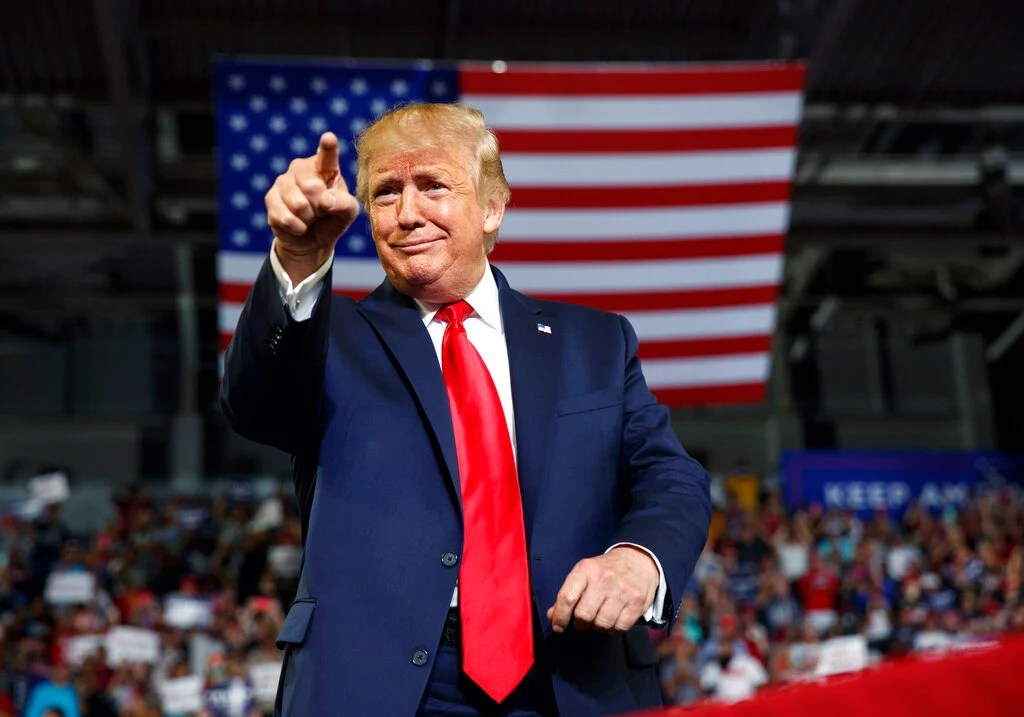
It is not a secret that I do not like Donald Trump as a person and I do not think that he is fit to be the President of the United States. That was true when he ran in 2016, when he ran in 2020 and when he sort-of ran in 2024 (I say sort-of since he declined to participate in the GOP debates and the Republican party did not require him to do so). And, since 2016, I have used my Facebook account to point out the concerns that I have with Mr. Trump, including his actions in office.

But suddenly, in the past month, I have had three individuals–all trusted brothers in Christ–approach me to express concern over my posts about Mr. Trump. I appreciate that they were willing to approach me; far too often we believers—especially, I dare say, Christian men—shy away from difficult, iron-sharpening-iron conversations. All three me approached me in the right way, following biblical principles, and all three, I believe, had an appropriate motive. To my knowledge, none of them knew anything about the other talking with me.

I will be the first to admit that if three Christian friends approach you about the same thing, it would be wise to listen. And I did listen. I don’t think I became defensive. I said that I would think and pray about what they had to say, and I have done that. But I should add that within the same time period I received, unsolicited, feedback from two or three people thanking me for taking a stand. I then solicited feedback from three other friends–people I have known for a long time, whose opinions I respect and whom I believe would tell me if they thought I was in the wrong–whether they thought I was out of line or risking offense with my posts. I have reached three conclusions as a result of those conversations and my prayerful reflection on them and I feel it is appropriate to share them here.

First, I care about politics and I like to argue. Debate would sound more polite, but argue may be more accurate. I have followed presidential politics since 1988. My undergraduate degree is in political science. I thought, for a long time, that I would be serving in an elected office or working for an elected official. God showed me that, thus far anyway, that has not been His plan for my life. But I am still interested in politics, I still like to argue and I definitely still have opinions. So maybe I have posted about Mr. Trump more than I should. I will continue to prayerfully evaluate that.

Second, the concern that was expressed, and all of the feedback and pushback that I have received about my posts and comments about Mr. Trump have come from other believers. And I cannot help but wonder why. None of the men who approached me suggested that I have posted anything that was factually wrong or biblically inaccurate. So why are the posts potentially offensive?

Strangely, some people who have taken issues with my posts have pointed out that God appoints leaders to accomplish his purposes on earth. There are two things to consider in regard to that. First, if you believe that, then you have to believe that God also appointed Joe Biden for office and that He had a purpose for having Biden in office for four years. You have to believe that about every office holder in the country. You don’t get to claim God is in charge only when things are going your way; God is in charge all of the time. The vast majority of the people who are now questioning my posts about Mr. Trump are the same people who repeatedly claimed that the 2020 election was stolen, said of Biden that he’s “Not my President!” and proudly wore shirts and flew flags proclaiming “Let’s Go Brandon!” But God put Trump in office for “such a time as this,” they say! Okay. Did he also put Biden in office for such a time as that? And Obama? And Bush? And Warren Harding? You can’t have it both ways.

Second, that argument is, I assume, based on Romans 13. That passage deals with being subject to rulers—including the often-overlooked instruction to pay taxes to whom taxes are due. But it begins with this verse: “Let every person be subject to the governing authorities. For there is no authority except from God, and those that exist have been instituted by God.” The verse says that governing authorities are instituted by God. But who is the governing authority in the United States? It is “we the people.” God, in His sovereignty, has given the citizens of the United States of America the ability to choose our own leaders. That does not mean that God chooses who our leaders will be. He allows them to be in office, because nothing happens that He does not allow, but there is a significant difference between what God allows and what God ordains. Check out 1 Samuel 8. The people of Israel wanted a king. God warned them of the results, but He also let them have what they wanted. The fact that Donald Trump is the President of the United States means that God has allowed Him to be; it does not mean that God ordained Him to be or put Him in that place.

Also interestingly, those questioning my posts repeatedly disregard Mr. Trump’s actions on January 6, 2021, and suggest that he did nothing wrong. It was all a peaceful protest or it was all manipulated or it was all faked. It was none of those things. I, and many, many others, watched it live. The testimonies of many who were there tell us what happened. People died. People were seriously injured. It was an incredibly sad day for America. Yet, they keep trying to claim that the J6 Committee destroyed evidence, which is a sure sign that they faked it all. Except that when I ask, as I have done repeatedly, for any evidence at all that the evidence was destroyed I get…crickets. That’s because there is no truth to that claim. (You can find far more evidence than you probably have time to read on GovInfo.gov—all there for you to look at it whenever you would like).

But what about the assassination attempts? Is God responsible for the fact that Donald Trump is still alive? Of course He is. He is responsible for the fact that I am still alive, and you are still alive and every person who is currently alive is still alive. That’s what it means for Him to be the almighty, sovereign God of the universe. It is not proof positive that God ordained Trump to be the president right now.

As I said, I have been following presidential politics since 1988. Since I have been old enough to vote, my preferred candidate in the primary election has only won the White House once, and that was in 2004 when George W. Bush was reelected. But I have prayed for every one of those presidents. I have prayed for wisdom and discernment and protection. And, when I felt it necessary, I have criticized the actions of every one of those presidents. Therein lies the rub…

The fact that I criticize some of what Donald Trump does, or how he does it, does not mean that I disagree with him on everything. When it comes to substance, I agree with him on more than I disagree with him. But he is not a nice man. He is not a good role model for young people. He does not have habits or leadership skills that anyone would tolerate in almost any other setting. He is arrogant. He is vindictive. He is petty. And he seems to have either forgotten, or not to care, that he is not a dictator and he cannot rule with the squiggle of his Sharpie. I think birthright citizenship for children of illegal immigrants should be reconsidered. I think the Department of Education should be eliminated. But he can’t do that on his own. He has to go about it the right way. This is a republic. We have rules and laws that must be followed. When he does admirable things the right way, I will probably comment on that. But when he does admirable things the wrong way, or things which are not admirable, I will definitely comment on that. Not because I am better than he is or because I enjoy it, but because I cannot sit idly by while so many people who profess to be followers of Christ blindly embrace his every move and follow in lock step his plan to Make America Great Again. I want America to be great, but that’s not what the Lord has called His children to pursue.

So, if you’re a follower of Christ, and my posts offend you, why is that? I am asking sincerely. I would honestly like to know. Are you really concerned about my relationship with the Lord—or are you bothered by the fact that I am not as gung ho about Donald Trump as you are? If it’s the latter, so what? I probably don’t cheer for the same sports team(s) you do either, or watch the same TV shows or prefer the same music. What difference does that make? But if it’s the former, that’s a real cause for concern—unless you’re equating the two. And I’m not being dramatic. I am aware of a church that has informed its congregants that if they do not support Donald Trump, they need to leave the church. That’s heresy. That’s idolatry. That’s elevating Donald Trump to a position of being more important than fidelity to the Word of God. And that cannot be ignored. The Bereans were commended for testing what Paul taught. We are exhorted to do that in our churches. We need to do it in the political sphere, too. Just because Trump says it or posts it on Truth doesn’t mean it’s true. Do some research. Don’t live in an echo chamber. Read, watch and listen widely—even, sometimes, to people you’re sure you disagree with. Be mature enough to admit that Trump makes mistakes and has flaws.

And please, keep in mind that when I post about Trump, I don’t mean it as a personal attack on you.

The third conclusion I have reached is that populism is so dangerous. It is not coincidental that Mr. Trump has a portrait of Andrew Jackson hanging in the Oval Office. It was during Jackson’s presidency that the worst domestic riot at the White House ever occurred—celebrating his election to the White House—and it was during Trump’s first term that the worst domestic riot at the Capitol ever occurred, trying to prevent his loss to Joe Biden from being certified by Congress. At least Jackson had lawfully invited “the public” to the President’s House, but the resulting fiasco resulted in such a mess that it took a week to clean it up. I have never seen—and in my study of history I am not aware of—a U.S. president who has gained such a cult-like following as Donald Trump. Sure, for decades now people have used pins, bumper stickers, t-shirts and signs to demonstrate their support for a political candidate and to encourage others to vote for that candidate. But those things generally disappear after an election other than in museums and in the hands of collectors. Not with Trump, though. People continued to wear MAGA hats and fly Trump flags for the duration of the Biden presidency. Entire MAGA stores sprung up. And Trump has capitalized on the blind loyalty of his followers, making money selling everything from Trump-branded shoes to Bibles to silver coins to cryptocurrency—and that’s not an exhaustive list.

Andrew Jackson would not, historically, be considered a populist, since most historians date the emergence of populism to the end of the 19th century. But the explanation of populism provided by Brittanica fits Mr. Trump to a t.

In its contemporary understanding, however, populism is most often associated with an authoritarian form of politics. Populist politics, following this definition, revolve around charismatic leaders who appeal to and claim to embody the will of the people in order to consolidate their own power. In this personalized form of politics, political parties lose their importance, and elections serve to confirm the leader’s authority rather than reflect the different allegiances of the people. Some forms of authoritarian populism have been characterized by extreme nationalism, racism, conspiracy mongering, and scapegoating of marginalized groups, each of which served to consolidate the leader’s power, to distract public attention from the leader’s failures, or to conceal from the people the nature of the leader’s rule or the real causes of economic or social problems.

Donald Trump’s supporters are no longer about the Republican party—they are about Donald Trump. He claims he has a mandate from the people to enact the sweeping changes he is instigating though his electoral victory was actually quite thin. While he did win a clear electoral vote, he won a bit less than half of the popular vote, making him the first minority president since…oh, Donald Trump, in 2016. When he was elected in 2016, Trump received a smaller percentage of the popular vote than any president since George Bush in 2000. But Trump is all about nationalism, scapegoating and conspiracy mongering. Watch out of you get out of step with him, even if you used to be his buddy. Just ask Nikki Haley, Mark Milley, Christopher Wray and a host of others. He seems to think he’s still starring on The Apprentice, firing people left and right, including the Archivist of the United States.

Since taking office three weeks ago, Trump has issued 59 executive orders. That’s more than any president has averaged per year since Jimmy Carter was in office. Executive Orders were designed to be rare. The first ten U.S. presidents didn’t issue as many combined as Trump has issued already. Not until Andrew Johnson did any single president issue more than Trump has in the past three weeks—and he was definitely serving during uniquely challenging circumstances. Not even Abraham Lincoln, who was widely criticized for expanding the power of the executive branch, possibly illegally, issued as many executive orders in his four-plus years in office as Trump has in the past three weeks—and Lincoln was literally trying to save the Union. No single president averaged as many executive orders per year as Trump has issued in three weeks until Theodore Roosevelt—who was president, interestingly, at the height of populism. Executive orders became a popular means of presidential influence through his cousin Franklin’s three-plus terms in office (he averaged 307 per year) but since then have declined sharply. In fact, Trump has already exceeded in number his own per-year average from his first term.

People have become so angry about the state of affairs in Washington, D.C.—and, in many cases, rightly so—that they don’t care what Trump does to “drain the swamp.” But doing the right thing the wrong way is still wrong. This is the United States of America, not some banana republic. Do you remember the Pledge of Allegiance? It says, “…and to the republic, for which it stands….” The power here resides with the people, not with the president, regardless of who he is.

We’re about to see if the courts will slow Trump’s abuse of power—or if he will even care if they try. If they don’t, or he doesn’t, we the people better care. We better take action—legal action, through our elected representatives—to bring him to heel. Throughout history, no story beginning with someone claiming that they are accumulating power for the good of the country has ended well, and it won’t this time, either.

Image credit: John Scott Comedy.
A Tale of Two Fathers

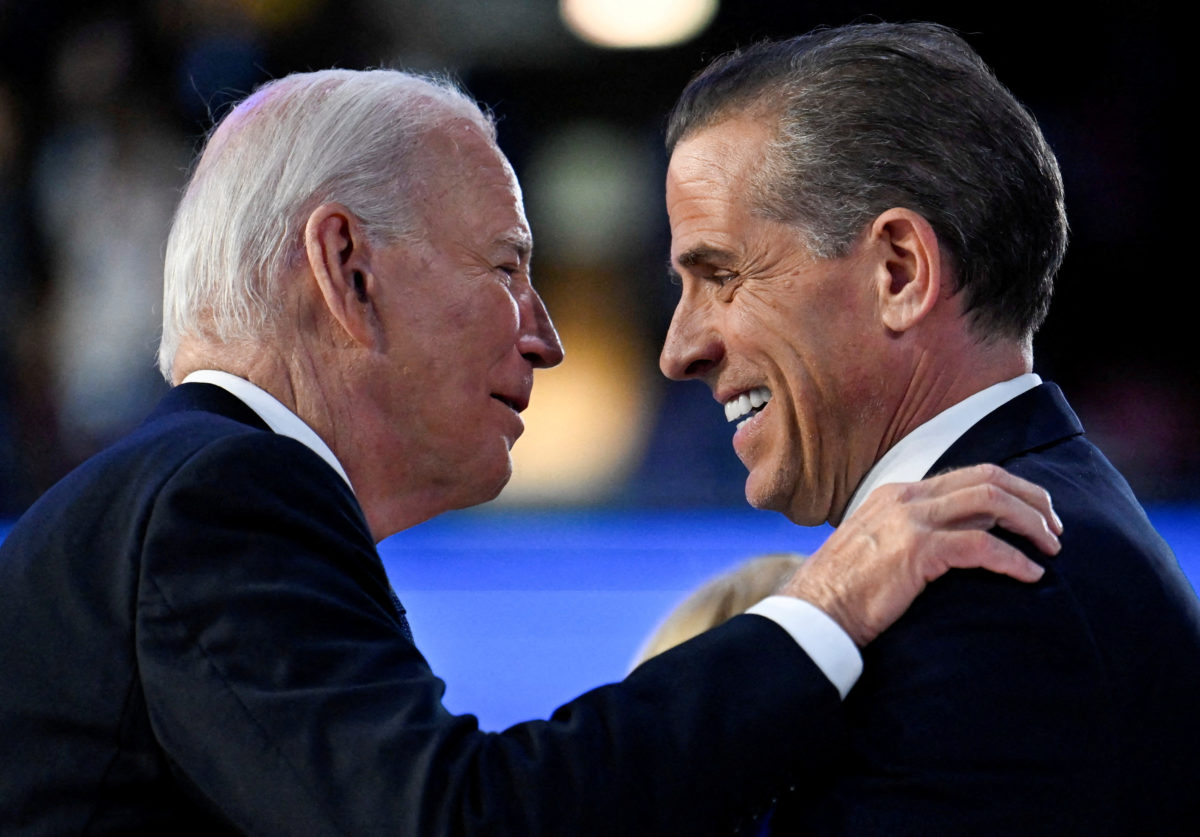
Joe and Hunter Biden.

I know that I am by no means in the minority when it comes to people disgusted by Joe Biden’s pardon of his son, Hunter. In fact, an AP-NORC poll found that only 22% of Americans approve of the pardon (though another 26% either didn’t approve or disapprove or didn’t know). Even among Democrats, only 38% approve. Partially the disapproval comes from the idea of a president using the power of his office for the benefit of his son and partially it comes as a response to Biden’s repeated statement that he would not pardon his son.

If you’re one of the few people not aware of what’s going on, Hunter Biden was convicted on both tax and gun charges. Biden said that the charges were a “miscarriage of justice” and White House press secretary Karine Jean-Pierre said that Biden ultimately decided to issue the pardon “because of how politically infected these cases were” and “what his political opponents were trying to do.”

The “politically infected” argument might have carried a little more weight if Hunter Biden had not already pleaded guilty to the charges and if Biden’s pardon were not so expansive. As to the guilty plea, Biden said that if the negotiated plea deal had held, “it would have been a fair, reasonable resolution of Hunter’s cases.” But because the plea “unraveled in the courtroom” and a number of Republicans “taking credit for bringing political pressure on the process,” Biden felt justified in issuing the pardon. Even if you want to accept that argument, though, Biden went further, issuing Hunter “A Full and Unconditional Pardon for those offenses against the United States which he has committed or may have committed or taken part in during the period from January 1, 2014 through December 1, 2024.” In other words, Hunter was pardoned not just for the two crimes to which he plead guilty, but for any and all crimes he may have committed during an eleven-year period leading up to the issuance of the pardon. No matter what Hunter did, or may have done, during that period—at least half of which he was addicted to drugs and/or alcohol—he will get off scot-free.

As reprehensible as this from a political standpoint, and as dangerous as the precedent is that it sets, Biden’s choice is understandable from a purely parental perspective. Every parent knows the tug that is felt when their child is in trouble and the wish that there was something that could be done to save them the pain of their choices. If anything, Joe Biden’s tug when it comes to Hunter would be even stronger, exacerbated by the fact that he was unable to do anything to protect his first wife or the two other children he had with her. Neilia, his first wife, and Naomi (known as “Amy”), their one-year-old daughter, both died in a car accident in 1972. Biden had just been elected to the Senate and was on his way to Washington, D.C. when, one week to the day before Christmas, Neilia was driving the family station wagon with all three children and was hit broadside by a tractor trailer. Neilia and Amy were pronounced dead on arrival at the hospital. Beau and Hunter survived, suffering a broken leg and fractured skull respectively. There was nothing Biden could have done for his wife and daughter.

Their first-born, a son named Joseph R. Biden III, but known as Beau, died of brain cancer in 2015. There was nothing that Joe Biden could do to protect him, either. Beau was a veteran, receiving the Bronze Star for his service in Iraq, and became the Attorney General of Delaware. In 2010, he suffered a stroke, but it was not debilitating. Three years later, after becoming weak and disoriented, a lesion was found on his brain and removed. He was given a clean bill of health but later that year was diagnosed with brain cancer. He underwent surgery, chemotherapy and radiation, but died in 2015. Despite the fact that he was the vice president of the United States at the time, there was nothing Joe Biden could do about it. Leaving behind a wife and two children, Beau was just 46—and Joe Biden had outlived a second child.

So, as I said, it is completely understandable that Joe Biden would, now that he finally had the ability to do so, act to protect his son Hunter from time in prison. But the fact that it is understandable doesn’t make it right. In fact, it will be a lasting blemish on Joe Biden’s career of more than fifty years in public service. Whenever the time comes and his obituary is written, it will certainly be mentioned. It also sets a dangerous precedent that will surely be followed by Biden’s successors.

All of that has been on my mind since Biden issued the pardon on December 1. But last night, lying in bed trying to go back to sleep after a mid-sleep trip to the bathroom, I was thinking about it being Christmas Eve and what that is really all about. Somehow, in the middle of that somewhere-between-sleep-and-awake state, I thought about the contrast between Joe Biden and God. Yes, I know, the differences are extensive, but I do have a point.

Joe Biden used his power to enable his son to avoid the consequences of crimes he committed. God, despite His unlimited power, sent His Son to earth in the form of a human baby with the sole purpose of living a perfect, sinless life in order to die an excruciating death on the cross for crimes (sins) that He did not commit. God did that, and His Son consented, in order to provide a way for me to be pardoned—for me to avoid the consequences I rightly deserve to pay for the crimes (sins) I have committed. When He rose three days later, Jesus conquered sin, hell and the grave. Today He is alive and seated at the right hand of His Father. But that in no way negates or diminishes the awesome gift of salvation or the unimaginably self-sacrificial obedience of Jesus Christ.

Joe Biden loves his son and he thinks that using his power to enable him to avoid the just penalties of his crimes is a demonstration of that love. It really isn’t, but that’s not the point I want to make here. God loves His Son, too. But He also loves the world (as John 3:16 tells us). In fact, He loves the world so much that He sent His Son to “save His people from their sins” (Matthew 1:21). Joe Biden let his Son off the hook for what he did; God put His Son on the hook for what He didn’t do. In so doing, He gave “the gift of…eternal life in Christ Jesus our Lord” (Romans 6:23). That was given “in accordance with the riches of God’s grace” and, as a result, I have “redemption through His blood, the forgiveness of [my] trespasses” (Ephesians 1:7)

You can have that, too. That’s the first, and best, Christmas gift.

Photo credit: REUTERS/Craig Hudson

Words of Warning

The 2024 election is over. And, I’ll admit, it did not go the way I expected. I doubted Donald Trump would win the White House and I certainly did not expect that Republicans would win the White House, Senate and House of Representatives. Turns out my predictions—or at least my expectations—were wrong. It is no secret that I do not like Donald Trump, but I do prefer the idea of four years of his policies over four years of Kamala Harris policies. That does not at all, however, change the fact that I do not like Donald Trump, that I think his rhetoric is inflammatory and dangerous and that I think it is repugnant that so many professing Christians—including many Christian “leaders”—have attached themselves so firmly to Trump that one could justifiably wonder whether or not they see Trump as a second Messiah.

I am not a prophet by any means and, as mentioned above, my most recent prediction about Mr. Trump proved erroneous. Nevertheless, there are three warnings I want to give as we look ahead to a second Trump administration.

First, I have a number of friends who have suggested—and I have seen it suggested by well-known evangelical figures—that we—America—deserved a Harris administration but God, in His grace, saved us from ourselves. Maybe. But maybe not. Don’t forget that there is another possibility and it is not nearly so exciting. Specifically, it may be that God allowed us what we wanted. Remember in 1 Samuel 8 when the people of Israel demanded a king? It displeased God that they did so. He instructed Samuel to warn them about what they were asking for. Samuel did do, but still the people insisted. “And the Lord said to Samuel, ‘Obey their voice and make them a king,’” verse 22 says. God was not saving Israel from anything. Neither was He blessing them. He was giving them what they asked for, knowing full well that they would reap what they sowed. Pray that is not the case now with Mr. Trump.

Second, we must be very careful not to allow the thrill of victory and the apparent wide-spread support for the Republican party to lead us into that which we would never tolerate from the “other side.” We already know that Trump and the Republican party have zero compunction about pushing things through in order to get their way. (Remember the appointment of Justice Coney-Barrett, anyone?) During the one-term presidency of John Adams the country got whipped into a frenzy of anti-French sentiment following the XYZ Affair. As a result, Congress passed, and Adams signed, what came to be known as the Alien and Sedition Acts, many of which were patently unconstitutional. John Adams, one of the leading figures in the American fight for independence, set aside his commitment to constitutional principles when it benefitted him and his party to do so. Donald Trump has a mean streak and a passion for vengeance that is unseen in the history of the Oval Office—with the possible exception of Richard Nixon. The list of people he might seek to get back at once he is back in office is lengthy. Let’s not forget that what goes around, comes around, and it won’t be a Republican in the White House forever.

Third, now that Trump has won the election, we need to insist that our evangelical leaders get back on track—or step aside. Too many of them have devoted their time, energy and passion to getting Donald Trump back in the White House. They have done so as if their lives and the future of Christianity depended on it. They have lost focus. While voting is a privilege that should never be taken for granted and Christians should exercise that right, getting the right candidate in any office is not what God has called us to do. You can look as long and as hard as you want to, but you will not find anywhere in Scripture where we are instructed to devote our time to politics or winning elections. We are, however, instructed to let our light so shine before men that they may see our good works and glorify God. Too many Christians, including a number of Christian leaders, have behaved in an un-Christian manner in their pursuit of a Trump comeback. We need to remember that leading souls to Christ is our calling, not leading voters to the ballot box. Winning spiritual battles is our calling, not winning elections. Yes, encouraging voters and electing godly candidates is commendable and even important. But not when it becomes our focus. Those are good things but not the best thing. Too many Christians and too many churches have lost their first love. They have become modern day examples of the church at Ephesus. If they are not careful, the Lord will come and remove their lampstand.

Just Tell the Truth

I recently received a mailing from Hillsdale College that had, visible through the address window, this bold-face question: “Will you help put the Constitution back in South Dakota schools?” As an educator in South Dakota–and a history teacher, specifically–I was curious what this was about. I have known of Hillsdale College for years and I enjoy reading their publication Imprimis. But I knew that the Constitution was not, in fact, missing from South Dakota schools.

The letter begins with the statement, “K-12 education in America is at a crisis point.” Not at all alarmist, right? Of course it is at a critical point, and there are very real problems, but then, when have there not been? The next paragraph is where the buzzwords come out, referencing “activists,” “entrenched education bureaucrats,” “destructive ideas” “critical race theory” and “other Marxist ideologies.” That was followed up with the bold, underlined sentence, “And they’re doing so in K-12 classrooms in your state.”

The letter is a plea to give money so that Hillsdale can continue to distribute pocket-sized copies of the Declaration of Independence and the Constitution, one of which they kindly enclosed with the appeal. The letter references a letter from “a little girl named Bailey” and even includes a copy. While neither the appeal letter nor Bailey’s letter says so, the response card says, “Schoolchildren like Bailey in South Dakota are counting on you!” Maybe the intent is to refer to schoolchildren in South Dakota who are like Bailey, but it sure seems to imply that Bailey is from South Dakota–just like the visible part of the letter I received suggests that the Constitution is missing from South Dakota classrooms.

So here’s my message to Hillsdale College–just tell the truth.

I can respect Hillsdale caring about the country. I can respect an effort to provide copies of the Declaration of Independence and the Constitution to schoolchildren. I can respect that there are real concerns about public education in the United States and about critical race theory. What I cannot respect is lying to try to get my support.

Sadly, lying seems to have become an accepted part of American life. Politicians do it regularly. Tucker Carlson does in just about every show. So do other so-called journalists. And this is on both sides of the political spectrum. It seems that an “end justifies the means” approach has taken over and few people have an issue with it. But it’s not just sad, it’s scary. And it will, if left unchecked, lead to the end of America as we know it.

For the record, the Constitution is not missing in South Dakota classrooms. The Social Studies standards that were adopted in 2015 say “Students will explain the historical impact of primary founding documents including, but not limited to, the Declaration of Independence, the U.S. Constitution, the U.S. Bill of Rights and subsequent amendments.” And that’s not for fourth grade, by the way–that’s the standard for kindergarten. The new standards, adopted in 2023, say, “The student identifies and explains the meaning of different symbols of America. Symbols may include, but are not limited to” followed by a list of thirty-three documents, dates, places, songs and mottos, including the Declaration of Independence and the Constitution as well as the national motto, “In God We Trust.”

I could provide ample examples from the 2015 standards, but let me stick with the 2023 updates. For first graders, “The student can recite the Preamble to the United States Constitution from memory.” A second grade student “demonstrates knowledge of the United States Constitution,” with seven subpoints laying out what that looks like. A second-grader also “demonstrates knowledge of the early United States under the Constitution” (six sub-points for that one) and knows the “initial and later views on the Declaration of Independence and the Constitution” of Frederick Douglass. Fourth graders have nine-sub points to demonstrate an understanding of the Constitution, seventh-graders have eight sub-points to do so (plus another seven sub-points about James Madison, including his role in the Constitutional Convention and in writing The Federalist Papers) and have another eleven sub-points for demonstrating “understanding of the structure and function of the United States Constitution.” Eighth grade students can name and explain the “16th, 17th, and 18th amendments to the Constitution” and can compare and contrast “the main ideas and programs of Lyndon Johnson’s Great Society and the principles of the Declaration of Independence and the Constitution.” This is all before the student reaches high school, where both United States History and American Government are required for graduation.

So please, Hillsdale, don’t act like the Constitution is missing from South Dakota classrooms. Make sure you know what you’re talking about–and tell the truth!