Robert Jeffress leaves the platform at First Baptist in Dallas after introducing Donald Trump.
Robert Jeffress, pastor of First Baptist Church in Dallas, welcomed Donald Trump to their service this past Sunday morning. The church’s website proclaimed: “The focus of the music and message this Sunday will be on the most important event in human history—the birth of Jesus Christ. President Trump is known for his love for Christmas and what it represents. We are thrilled to have him join us this Sunday morning.” Apparently Trump was in Dallas for a rally that afternoon with Bill O’Reilly, but Jeffress seized the opportunity to have him at First Baptist.
Readers of this blog know that I am not a fan of Donald Trump. In the interest of full disclosure, I should say now that I am not a fan of Robert Jeffress, either. To give you an idea why, consider the biography of Jeffress that appears on the First Baptist web site. It begins, “Dr. Robert Jeffress is Senior Pastor of the 14,000-member First Baptist Church, Dallas, Texas and a Fox News Contributor. He is also an adjunct professor at Dallas Theological Seminary.” It then proceeds to tout his “more than 4,000 guest appearances on various radio and television programs” before listing some of the shows he has appeared on. After mentioning his radio program, TV program and books, it says, “Dr. Jeffress led the congregation in the completion of a $135 million re-creation of its downtown campus. The project is the largest in modern church history and serves as a “spiritual oasis” covering six blocks of downtown Dallas.” Presumably that means First Baptist’s modern church history because if it means modern church history in the broader, worldwide sense then it is an outright lie, but either way…brag much? Jeffress seems to fully embrace the notion of “celebrity pastor.”
Having said that, Jeffress does seem to teach biblical truth. I may not like his personality, his arrogance or his priorities, but I am unaware of any heresy he preaches.
Before preaching his sermon, Jeffress said that Trump’s remarks would be the “climax and conclusion of the service.” While Trump spoke of the biblical account of Christmas, in words he admitted were prepared for him by the church, he added references to Afghanistan, police reform, America first and his never-ending crusade to “make America great again.” He even managed to work in his irritation with the press that Melania Trump received for her selection of White House Christmas decorations while Trump was president. Trump then received a standing ovation that included some chanting “U.S.A.!”
The bulletin at Fist Baptist on December 19
Absurdly, the church’s executive pastor then took the stage and said, “While we were very honored to have the 45th president of the United States with us today, I must remind you that it is our longstanding policy as a church that we do not endorse or oppose any political candidate for public office or otherwise intervene or engage in any political campaign.”
Uh huh…
Interestingly enough, the church’s website even contains a small-print disclaimer that appears on every page and reads, “First Baptist Church of Dallas does not endorse or oppose any candidate for political office. Instead, any information, videos, appearances, posts, etc. related to any political topic are provided for informational purposes only, and represent the personal views or opinions of the individual expressing them, but do not necessarily represent the views or opinions of First Baptist Church of Dallas.”
Trump made it clear that he was going well astray of the remarks that had been prepared for him, but since Jeffress has been an unabashed supporter of Trump all along there is no way he could truly have been surprised. After all, Donald Trump has never stuck to a script in his life and he is not going to pass up any opportunity to make something about him. I am not embellishing here, either; while introducing Trump, Jeffress called him one of his closest friends. He even said that Trump was “the most consequential president since Abraham Lincoln.” After the service Jeffress had the temerity to say that he did not think that Trump had said anything political and that the “full house” at First Baptist was evidence of Trump’s popularity.
Trump’s visit to First Baptist is certainly not the first time a political figure has attended a church service. That happens often and on both sides of the aisle. It is not the first time a political figure has been acknowledged at or given the opportunity to speak at a church service. Again, happens on both sides of the aisle. But a politician should never be the center of attention at a church service. Indeed, no human should ever be the center of attention.
It is incredibly sad that Robert Jeffress would preach a message that was, by all accounts, biblically accurate and invited unbelievers to salvation, yet call Trump’s remarks the climax. That absolutely sends the wrong message. Intended or not, Jeffress essentially declared that the account of Christ’s birth is nice, but Donald Trump is better. There is no greater climax than the birth of Jesus Christ in human form, coming to earth as a baby, knowing He would grow up to die on the cross for the sins of humanity. How tragic that minutes after that truth was proclaimed—and thankfully it was proclaimed—the congregation was chanting about human politics. A church service should never become a political rally. Chants of “U.S.A.!” in a worship service should sadden any true believer.
This morning, TIME announced that Simone Biles has been selected as its Athlete of the Year. It did not take long at all for the backlash against the choice to begin, particularly amongst the so-called conservative online press. The Western Journal headed its social media post with “’How can TIME choose her over much more deserving athletes?” and linked to a piece by Jack Davis published just an hour after TIME’s announcement was made. And this is how he began his comments:
The old adage was that “winners never quit and quitters never win.”
But in 2021, quitters can be named Athlete of the Year.
This is a ridiculous and, frankly, stupid statement to make. It completely disregards Biles’ own statements made shortly after she withdrew from the team competition in Tokyo that she was experiencing “the twisties,” If you’re anything like me, you had no idea what that was exactly when you first heard it. If you follow the Olympics then you probably know now, but just in case, here is a definition provided in a July 28 Washington Post article by Emily Giambalvo—”the twisties”
describes a frightening predicament. When gymnasts have the “twisties,” they lose control of their bodies as they spin through the air. Sometimes they twist when they hadn’t planned to. Other times they stop midway through as Biles did. And after experiencing the twisties once, it’s very difficult to forget. Instinct gets replaced by thought. Thought quickly leads to worry. Worry is difficult to escape.
The same article quotes Biles saying, “I had no idea where I was in the air. I could have hurt myself.”
Athletes are not machines that can perform on demand. I cannot imagine that anyone wanted her to dominate the Tokyo Olympics more than Simone Biles wanted it herself. The expectations were through the proverbial roof. I detest the term GOAT, but if there is one in the world of gymnastics, it is Simone Biles. As the commentators never tired of pointing out, Biles does skills that other gymnasts can only dream about doing; she has four skills named after her. That means that she performed those skills, previously unperformed by anyone else, at a major international competition. Prior to the Tokyo Olympics there was speculation that Biles might increase that number to five.
Biles has won 25 World medals in Olympics—19 of which were gold—and both of those numbers are the records for gymnastics. Biles was the first woman to win five World floor exercise titles, to win three World balance beam titles and to win five World all-around titles. Not the first to accomplish that combination, mind you, but the first to reach all three of those levels. She is a five-time U.S. floor exercise champion, five-time U.S. balance beam champion, six-time U.S. vault champion and seven-time U.S. all-around champion. She has seven Olympic medals, tying her with Shannon Miller for the most by an Olympic gymnast. This is not the resume of a quitter.
Why, then, such a negative reaction to TIME’s choice?
Well, back to Davis’s pitiful opinion piece, Biles withdrew from the team competition of the Olympics because “she was not sufficiently mentally focused on what she was doing and could have injured herself had she competed in her condition.” That’s a gross and, I dare say intentional, misrepresentation of the facts. While technically a true description of the twisties, the implication is clearly that Biles was slacking, not giving the competition the attention it demanded and her performance was suffering as a result.
Davis continued with, “Time [sic] explained that those old-fashioned views about athletes achieving excellence in their sports had nothing to do with its decision.” Again, the implication is that Biles has not achieved excellence. Might I direct you back two paragraphs for evidence of the absurdity of that suggestion. Was Biles the best athlete of 2021? Probably not. She certainly did not achieve the level of success expected of her in Tokyo. But it’s not like she was a slouch. She qualified for the Olympics, after all, and at the age of 24. Sixteen is considered to be the peak age for a gymnast. The Tokyo Olympics was the first time since 1968 that there were more non-teens than teens competing in gymnastics, and even in Tokyo the median age was 21 and the average age was 21 years 11 months. Even though every member of Team USA’s artistic gymnastics team in Tokyo was 18 or older for the first time since 1952, Biles was the oldest on the all-around team by three years. McKayla Skinner was on the USA squad as a specialist, and she is older than Biles by just over three months. The other specialist was Jade Carey, who was 21, and who ended up subbing for Biles in the all-around. But the other three original members of the team were 20 (Jordan Chiles) and 18 (Suni Lee and Grace McCallum). Biles returned to the Olympics for the individual balance beam competition and she took Bronze. The winners of Gold and Silver were Guan Chenchen (age 17) and Tang Xijing (age 18) respectively. So you’ll pardon me for calling the assertion that Biles did not achieve excellence nothing but hogwash.
Later, Davis wrote, “The article extolling her selection labeled those who believe dropping out of Olympic events partway through them is not the hallmark of a champion as ‘naysayers.’” Davis pointed this out derisively, but the statement is correct. Athletes cannot be demanded, or even expected, to be super-human. Many athletes—perhaps Simone Biles more than any—do things that the rest of us cannot even comprehend, much less imagine doing. But they are still mortal. They are still human. They still have bad days and struggles and doubts. And that does not even include the fact that doing Olympic-level gymnastics with the twisties is just plain dangerous.
Davis enjoyed pointing out that “many disputed Time’s selection.” Of course, none of the “many” that Davis quoted were gymnasts. As best I can tell, none of them is even an athlete. I am sure I am not the only one who thinks that Biles’ withdrawal from Olympic events—not her quitting—was not only justified but groundbreaking. Her teammate Suni Lee said, “What Simone did changed the way we view our well-being, 100%. It showed us that we are more than the sport, that we are human beings who also can have days that are hard. It really humanized us.” 1988 Olympian Missy Marlowe said the twisties is “like a nonserious stroke.” 1996 Olympian Dominique Moceanu, who was only 14 at the Atlanta Olympics, tweeted that Biles’ decision “demonstrates that we have a say in our own health—’a say’ I NEVER felt I had as an Olympian.” Dominique Dawes, who competed in three Olympics (1992, 1996, 2000) said that she quit during the 2000 prelims but was not allowed to do so. “[I]t was too much on me emotionally,” Dawes said. “However, I was not able to make that decision. It was very much a controlled atmosphere.” Nastia Liukin, who won the All-Around gold medal in 2008 and was a commentator at the Tokyo Olympics, said, “Thank you for creating a safer space for current and future athletes to unequivocally be themselves.” And 2012 Olympic gymnast Jordyn Wieber said “I never remember feeling like I ever got to make those decisions, even if I had wanted to,” continuing, “the gymnasts don’t have the voice, it’s up to the coaches. And I sometimes describe it as we’re just kind of like robots that do what we’re told.” Wieber, who is now the head gymnastics coach at the University of Arkansas, called Biles “a pioneer,” and Moceanu, who owns and coaches a gymnastics camp, said, “What she did was actually very brave and is a positive sign for the future of the sport.”
All of this would be sufficient to justify the selection of Biles as TIME’s Athlete of the Year for someone who feels such justification is necessary, but there is more. Biles was also one of four gymnasts who testified before the Senate Judiciary Committee in September regarding the FBI’s handling of the investigation into Larry Nassar. While the other three gymnasts—Aly Raisman, McKayla Maroney and Maggie Nichols—were all outstanding gymnasts, with Raisman and Maroney competing in the Olympics, only Biles is still actively competing. She had to testify just a month and a half after the Tokyo Olympics—an Olympics at which she was representing not just the United States, but also USA Gymnastics. Of that, Wieber commented, “I can take some guesses and imagine that it’s probably difficult to represent an organization like USA Gymnastics for her, an organization that has failed her so many times and failed a lot of us. I’m just making assumptions here, but I can imagine that it, it adds to the weight of what she carries with her every day of having to represent that organization.” No doubt Wieber is right, given what Biles said in her testimony:
I believe without a doubt that the circumstances that led to my abuse and allowed it to continue, are directly the result of the fact that the organizations created by Congress to oversee and protect me as an athlete – USA Gymnastics (USAG) and the United States Olympic and Paralympic Committee (USOPC) – failed to do their jobs.
Later, Biles said, “We suffered and continue to suffer because no one at the FBI, USAG or the USOPC did what was necessary to protect us. We have been failed, and we deserve answers.” As she also pointed out in her statement, Biles was the only athlete at the Tokyo Olympics who was abused by Larry Nassar.
Put the Senate committee testimony and the impact of the Nassar abuse and investigation together with everything else described here and Biles should be an obvious choice for Athlete of the Year, not a choice that is second guessed and mocked.
And yet, mockery and scorn is exactly what Biles is receiving. Not only did Davis write his absurd opinion piece, but The Western Journal published it. The Independent Journal Review then published it, too. So opposed are some to the Biles choice that one tweet that Davis chose to include suggested four other candidates for the recognition—only one of which is an American! It is true that TIME’s Person of the Year is not always an American, but it is, after all, an American magazine, so I think a Serbian tennis player, Australian swimmer and Russian tennis player should take a back seat in this discussion.
Far worse that Davis’s article, however, are the comments on the social media pages for The Western Journal and the Independent Journal Review. One charming individual, for example, said, “she’s a triple winner in the Victimhood Olympics – Female, Black and suffers from anxiety.” Several people commented that it was a “woke” decision. More than one called her a quitter, including one guy who said, “She quit on her teammates and America,” echoed by a lady who commented, “She let our country down and deserves no recognition!!” Not to be outdone, another lady said, “She is a failure and a crybaby who deserves nothing.” Someone named Joseph Casale probably topped them all, though, calling Biles the “coward of the year.”
One of the wonderful freedoms we enjoy in the United States is the freedom of speech, and that means that people have the freedom to say and write stupid things. That means internationally known companies and publications, like TIME, and a guy in front of a keyboard or pecking away at his phone like Jospeh Casale—or me. But I could not sit idly by and watch Biles’ recognition be trashed as some politically correct participation trophy. She deserves the recognition and I commend TIME for the choice. Should she ever (miraculously) see this post, I want Simone Biles to know that I do not think she let down her teammates or America…and I admire her courage.
Unless you have been living under the proverbial rock, you have heard and/or seen the phrase “Let’s Go Brandon!” The use of the phrase began with a NASCAR race on October 2 in Talladega. Driver Brandon Brown was being interviewed by a reporter who suggested that the crowd was chanting “Let’s Go, Brandon!” That was not at all what the crowd was saying, though; turns out the actual words were far less encouraging. In fact, they weren’t even polite. The crowd was actually saying, “F— Joe Biden!” I did not take long for “Let’s Go Brandon!” to catch on as a way of expressing dislike for President Biden.
The only good thing about it is that it does not contain the actual profanity the crowd was chanting, which, sadly, I have seen displayed numerous times in public, often on flags using the same design as pro-Trump banners but with the other words. It was not that long ago that publicly displaying the “f-word” would have been considered extreme and unacceptable. Now people are literally flying it from their front porches.
In an AP article, Colleen Long called “Let’s Go Brandon” the “G-rated substitute for its more vulgar three-word cousin.” The problem is that despite it G-rating, everyone now knows exactly what the phrase means. And precisely because it is, in and of itself, G-rated, people who would never utter what the NASCAR crowd was chanting or fly profanity from their porch are perfectly comfortable displaying and/or being seen with the child-friendly alternative. You can find it on flags, stickers, t-shirts…even “ugly sweaters.”
In the same AP article quoted above, Long pointed out that Republican Rep. Bill Posey of Florida ended a speech on the House floor with the phrase, South Carolina Republican Jeff Duncan wore a “Let’s Go Brandon” face mask at the Capitol, Republican Senator Ted Cruz of Texas posed with a “Let’s Go Brandon” sign at a World Series game and the press secretary for Senate Majority Leader Mitch McConnell of Kentucky retweeted a picture of a sign in Virginia bearing the phrase. Colorado Rep. Lauren Boebert famously wore a dress with the phrase on the back to meet with former president Donald Trump. (The dress was also a dig at Rep. Alexandria Ocasio-Cortez’s “Tax the Rich” dress worn to the Met Gala). When Boebert tweeted a picture of herself in the dress standing next to Donald Trump giving a thumbs up, she headlined it with “It’s not a phrase, it’s a movement! #LGB”
In late October a pilot for Southwest Airlines concluded his address to passengers with the phrase. Just a few days ago I saw someone wearing a t-shirt emblazoned with the phrase at a Christian school. Jim Innocenzi, a founding partner at Sandler-Innocenzi and a prominent figure in political advertising for the GOP called the phrase “hilarious” and said, “Unless you are living in a cave, you know what it means. But it’s done with a little bit of a class. And if you object and are taking it too seriously, go away.”
Well, I have news for Mr. Innocenzi: G-rated or not, that’s not okay. There is no way to say “f—” with class. Not even a little bit. To normalize such a profane insult toward any elected official, much less the President of the United States, is not appropriate or respectful. While it is true that we enjoy freedom of speech in the United States, and the ability to express our displeasure with and dislike of our elected officials should not be taken for granted or infringed, there is still something to be said for basic decency.
Just yesterday Amanda Prestigiacomo published an article on The Daily Wire in which Mike Rowe of Dirty Jobs fame defended the use of the term. Rowe, according to Prestigiacomo, said that the phrase is “a refutation of not only the president, but of the media and the Left’s effort to change the meaning of language.” I am afraid Mr. Rowe is being too clever by half. While he is correct that much of the American public is growing tired of the mainstream media telling them “that what they’re seeing and what they’re hearing is not what they’re seeing and hearing,” he is bestowing upon “Let’s Go Brandon” far more intention and meaning that it really has. There is zero evidence that Kelli Stavast, the NBC Sports reporter who claimed in the interview with Brandon Brown that the crowd was chanting “Let’s Go Brandon!” did so with any intentionality. Bruce Haring, on Deadline, said that Stavast “is either hard of hearing, or a very, very quick thinker.” There were immediate claims that Stavast was gaslighting the public and that the media would do anything to protect Joe Biden. I suspect, however, that Stavast is not hard of hearing and that her misinterpretation of the chant was not quick thinking on her part. She was trying to conduct an interview. No doubt she had an earpiece in, was trying to hear Brown, and was trying to do all of this with a noisy crowd screaming to be heard on the live camera. Stavast certainly could not repeat what the crowd was actually chanting, and it is entirely plausible that she thought the crowd was showing support for Brown’s first victory. It strains credulity to think that Stavast was intentionally, as Rowe suggests, trying to tell the television audience that they were not hearing what they eventually realized they were hearing.
Later in the Daily Wire piece, Rowe is quoted as saying, “I don’t think people who yell it are necessarily enemies of the president. I think they’re enemies of being told that what they’re seeing and what they’re hearing isn’t real, that it’s somehow a figment of their imagination. People are sick of that.”
I am sure they are. But let’s not try to excuse a euphemistic means of saying “F— Joe Biden” by instilling in the phrase something that it is not. To do so is to do exactly what Rowe claims people are sick of—to claim that what people are saying is not what they are really saying. Stavast was in an of-the-moment situation with conditions that were not ideal. Rowe is speaking a couple of months after the fact, having had plenty of time to think through what he is saying. If anyone is gaslighting here, it is Rowe. He makes valid points that are worthy of attention. Unfortunately, he detracts from a valid and important discussion that needs to be had by claiming that those legitimate concerns are encapsulated in “Let’s Go Brandon.”
So, I have a better idea… Go away, Brandon. Please.
Paloma Esquivel’s recent article in the Los Angeles Times about grading practices is mindbogglingly contradictory. The headline says that schools are “ditching the old way of grading” in light of skyrocketing numbers of Ds and Fs brought on largely due to COVID-related changes in education. The article begins by referring to a teacher who became increasingly frustrated a few years ago with the fact that grading “had become a points game.” His solution? He “has done away with points entirely. He no longer gives students homework and gives them multiple opportunities to improve essays and classwork. The goal is to base grades on what students are learning, and remove behavior, deadlines and how much work they do from the equation.”
This sounds lovely, but it is a false dichotomy. I will not address homework here, because that is a separate issue and one I have discussed previously. To imply, though, that basing grades on what students are learning is a new concept is laughable. Effective grading has always been based on what students are learning. Furthermore, to suggest that using points has nothing to do with what students are learning is equally laughable. If, after all, a teacher gives students a quiz with ten questions designed to gauge the student’s mastery of content, and the student misses three of the ten questions, it is neither inequitable nor unrelated to learning to give that student a grade of 7/10 or 70/100 or 35/50 or whatever scale is used in grading the quiz. In other words, it is quite possible to base grades on what students are learning and still utilize points.
That move away from points is, Esquivel writes, part of a trend of “moving away from traditional point-driven grading systems, aiming to close large academic gaps among racial, ethnic and economic groups.” This is both a false dichotomy and an insult to any student considered to be disadvantaged by their racial, ethnic or economic group because the unmistakable implication is that such students are not capable of learning well enough to achieve a good grade.
Esquivel continues, “Los Angeles and San Diego Unified — the state’s two largest school districts, with some 660,000 students combined — have recently directed teachers to base academic grades on whether students have learned what was expected of them during a course — and not penalize them for behavior, work habits and missed deadlines.” Again, this is making an unfair implication that utilizing points automatically and necessarily does not result in a grade based on actual learning.
There is another dangerous element to this too, though. Eliminating behavior and missed deadlines from grading serves only to create a false concept among students that those things do not matter. In reality, though, both matter. Or at least they are supposed to matter. That behavior matters regardless of performance is something that our culture is increasingly coming to terms with; thing, for example, of how many professional athletes are now disciplined or even released because of their off-field behavior, regardless of how well they perform during game time. Movie stars and television personalities, politicians, business executives… All are being increasingly held accountable for behavior even when it is not directly related to the performance of their job. It is not, then, inappropriate, nor is it unfair, for bad behavior to impact a student’s grade. And to say that missed deadlines should not apply is truly silly. See how well and how long it lasts trying to tell your employer that deadlines shouldn’t apply to you…for whatever reason. The notion that allowing students to revise essays or retake tests means deadlines have to be eliminated is simply not true.
Esquivel quotes Alison Yoshimoto-Towery, L.A. Unified’s chief academic officer, as saying, “It’s teaching students that failure is a part of learning. We fall. We get back up. We learn from the feedback that we get.” Again, this is true. Again, it is not new. And again, it does not negate a points-based grading system. But Yoshimoto-Towery claims that traditional grading systems have been used to “justify and to provide unequal educational opportunities based on a student’s race or class.” This is patently false, and again such an implication serves only to insult students and their families by implying that some students just cannot succeed without “the system” being manipulated in their favor.
The COVID pandemic, Esquivel writes, gave teachers a new insight, as teachers suddenly “saw how some teenagers were caring for younger siblings while trying to do their own work and witnessed the impact of the digital divide as students with spotty internet access struggled to log on to class.” Do some teenagers have more responsibilities than others outside of school? Of course. Does that impact the amount of time those students have to do homework? Certainly. Does it mean that those students do not need to master content at the same level as other students? No. Internet access is a valid concern, but one that serves only to reinforce the importance of in-person learning, not one that means that grading scales and systems need to be chucked. Carol Alexander, director of A-G intervention and support for L.A. Unified, said that the pandemic heightened awareness of such differences, “but those different circumstances of learning have always been present.” Quite right. And despite them, students of all ethnicities and socioeconomic classes have always found a way to succeed if they—and their parents—prioritize their education.
The West Contra Costa Unified district, which is majority Latino, issued a memo last year encouraging its secondary teachers to give a five-day period to turn in work. Makes sense amidst COVID. The memo also said, “Assignments, exams, quizzes, or projects will be marked ‘Missing’ until completed” rather than be given a zero. Missing assignments would “not be given a zero, but rather a failure to turn in or F in the gradebook to maintain the relative mathematical validity of the gradebook.” This is nothing more than fancy footwork; an assignment that is missing is still missing, and therefore ungradable, regardless of what it is called or how it is entered in a gradebook. Presumably if that assignment were never turned in the student would never receive a grade for it—or for the class.
Next Esquivel cites Placer Union High School District, which directed its teachers “to base grades on ‘valid evidence of a student’s content knowledge and not…on evidence that is likely to be influenced by a teacher’s implicit bias nor reflect a student’s circumstances.’” If that’s a novel idea, that’s terrible. Of course student’s grades should be based on evidence of content knowledge! There is no place for teacher bias in grading. Notice, though, that the statement also says that grades should not “reflect a student’s circumstances.” Exactly! Grading systems should be fair and consistent across the board—regardless of any extraneous factors (including ethnicity, socioeconomic status or any other circumstances). Esquivel, and the memos and directives she cites, like to use the word “equity.” Equity means “fairness or justice in the way people are treated.” That means treating all students fairly and not treating them differently based on any factor other than mastery of content and completion of course assignments. The Placer board policy says, in part, “A teacher shall base students’ grades on impartial, consistent observation and evaluation of students’ learning and their proficiency in Essential Learning Outcomes.” Again…duh!
Shockingly, Esquivel writes that prior to the pandemic, “In Los Angeles, the district had begun to train teachers on practices including basing grades on whether students are meeting academic standards.” Whatever else student grades had been based on before I would love to know. If grades were truly being given on the basis of something other than meeting academic standards then there was a real problem. “In the recent guidance,” Esquivel wrote, “teachers were directed to base final academic grades on the ‘level of learning demonstrated in the quality of work, not the quantity of work completed.’” I do not understand the idea that a grade would be based on a quantity of work completed. Presumably all students would be assigned the same work. If some completed all of it, but did so poorly, that should be reflected in their grades. If some completed only a little of it, that too should be reflected in the grades. Even if 15% of assigned work was completed perfectly, that leaves 85% of the work undone. Unless work is being assigned purely as busywork, no one could demonstrate mastery of a course by completing only 15% of the work assigned.
Esquivel quoted Yoshimoto-Towery as saying, “Just because I did not answer a test question correctly today doesn’t mean I don’t have the capacity to learn it tomorrow and retake a test. Equitable grading practices align with the understanding that as people we learn at different rates and in different ways and we need multiple opportunities to do so.” This is both true and false. Answering a question incorrectly today does not mean the one answering could not learn the correct answer and get it right tomorrow—or next week—or next year. That’s true. But if the standard or expectation is that you should know it today, and you do not, it is not unfair or inequitable to tell you that you got it wrong today.
Incomprehensively, Esquivel says that “shifting away from traditional grading to basing grades on whether students have mastered standards is not easy.” I would love to know what Esquivel, or any of the Los Angeles area educators she references, think traditional grading was based on. To her credit, Esquivel does quote Frederick M. Hess of the American Enterprise Institute as pointing out that telling students that deadlines do not matter does not prepare students “for successful careers or citizenship.”
Thomas Guskey, author of On Your Mark: Challenging the Conventions of Grading and Reporting, told Esquivel that reforming the grading system is “not about watering down expectations; it’s about ensuring that grades are meaningful and fair.” With that I can agree. Grades need to be meaningful and fair. If they have not been then that needs to be fixed. Let’s just be careful that in the process of pursuing that meaning and fairness we do not achieve the opposite.
I have seen quite a bit of hypocridity coming out of Seattle lately. You may be thinking you have never heard of hypocridity, and that’s true—because it is a term I just made up. It is a blending of hypocrisy and stupidity, and it is a dangerous combination.
More than a week ago the Capitol Hill Autonomous Zone, or CHAZ, was “formed in the wake of police giving up the week-long blockade of the East Precinct,” according to a June 9 post on the Capitol Hill Seattle blog. Per a tweet from Mayor Jenny Durkan, the abandonment of the precinct was “an effort to proactively de-escalate interactions between protestors and law enforcement outside the East Precinct.” She went further than that, however, saying, “Keeping demonstrations peaceful must be a joint effort between our community members and law enforcement. I am hopeful that tonight, with these operational changes, our city can peacefully move forward together.”
Here is a beautiful example of stupidity. According to Durkan, the “joint effort” necessary to maintain a peaceful demonstration is the evacuation of police so that the protesters can do whatever they want. But that is not a joint effort. That is total capitulation. Just imagine what would happen if the world was suddenly full of “joint efforts” in which one side caved completely to the other!
Per the same blog post, Seattle Fire Department personnel “removed ‘many personal effects of the officers normally stationed in the East Precinct’ as part of a ‘proactive effort to guard against potential damage or fire.’” That doesn’t sound like they were anticipating a peaceful demonstration, does it?
An update to the blog described Tuesday morning, June 9 this way:
The first morning brought a new configuration to the streets. The police barricades and walls left behind have provided protesters the resources they need to create their own path through the neighborhood. Barriers have been dragged into a zig zag maze to block traffic from passing through 12th Ave or up and down E Pine with a steady stream of cars and trucks performing u-turns and three-point turns to avoid the blockades. Tent shelters have been put up to help keep volunteers dry at the edges of the core around 12th and Pine. At one on the southeast corner of the intersection, a few people sat around while one approached CHS and encouraged “white people” to come to the scene and help them hold the block. Above the walled-off entrance to the building, the sign has been spray painted to now read “SEATTLE PEOPLE DEPARTMENT EAST PRECINCT.”
In other words, the peaceful demonstration had tuned into a takeover.
Evan Bush wrote a piece for the Seattle Times on June 10 that said, in part, “A new protest society — centered on a handful of blocks in Seattle’s quirky, lefty Capitol Hill — has been born from the demonstrations that pushed the Seattle Police Department out of its East Precinct building.” The same article quoted protester Sarah Tornai saying that people desire to be “autonomous from the way the Seattle Police Department has been policing them.”
When CNN’s Chris Cuomo asked Jenny Durkan on June 11 how long the autonomous zone situation would continue, Durkan replied, ““I don’t know. We could have a Summer of Love!”
Seattle’s KOMO news reported that Seattle Police Chief Carmen Best said, also on June 11, “There’s no game plan for this. This is absolutely unprecedented. I’ve never seen people force a decision to be made to move officers out of this facility in this manner. So, there is no game plan, there couldn’t be, because it’s unimaginable, what’s happening to us right now.” Best added that police response time to priority calls inside the zone had more than tripled, from five minutes to eighteen, while the response time to secondary calls was nearly an hour. “There are people’s lives who are affected,” she said. “Emergency calls, which often means somebody’s being assaulted, sometimes it’s a rape, sometimes it’s a robbery, but something bad is happening if it’s a top priority call, and we’re not able to get there….”
That doesn’t sound much like a summer of love…
In a June 16 piece for Slate, Jane C. Hu wrote that after hearing rumors and seeing reports that there were ID checks and armed individuals patrolling the streets, she went to check it out for herself. She reported barricades, but no ID checks. She also reported, “it’s obvious to anyone in Seattle that the zone is not autonomous.” The people inside the zone are still using water and electricity, for example. This may be why the preferred name was switched from CHAZ to CHOP—the Capitol Hill Occupied Protest.
Hu added that while there were no armed guards or ID checks, “if people recognize you and they’re not fans of your work, there is a chance you’ll be confronted by a crowd asking you to leave.” In other words, anyone and everyone is welcome…as long as the crowd does not dislike you.
Hu also described the No-Cop Co-op. “The ‘No Cop Co-Op’ had piles of bread, jam, oats, and peanut butter, with a sign encouraging people to avail themselves: “Do not take one granola bar—take the whole box. Take an entire case of pop. You do you. Just stop looking and start shopping,” she wrote.
Hmmm. You do you…but if people recognize you and don’t like you, you will be asked to leave. Makes sense….
Then, also on June 16, FOX News reported between the city and the CHOP protesters that would “remove temporary roadblocks and replace them with concrete barriers.” The barriers would be installed by the Seattle Department of Transportation and would be placed in such a way that emergency vehicles would be able to access the area.
So, Seattle city services would install the barricades, and Seattle emergency vehicles would be able to provide services in the area… Not much autonomy in that arrangement, is there?
Nevertheless, Mayor Durkan still thinks its all great. “Seattle is the best city in America. Don’t let Fox News distort the truth. And take a look at the real truth of the ‘nation formerly known as downtown Seattle,’” she tweeted on June 17. That was two days after a crowd broke down a fence and demanded that the owners of an auto repair business release a man they had caught after he broken into the business and tried to start a fire. More than a dozen 911 calls were placed by the business owners, but no emergency personnel arrived. The Fire Chief later visited and said he was looking into why fire personnel had not responded to the calls. The answer later emerged; per FOX News, “the fire team was waiting on a police escort to the business, but police did not want to enter the area to escalate tensions. Seattle police took a report of the incident and sent officers to the periphery, but did not engage with the business owners or protesters or take the suspect into custody.”
Ami Horowitz, who says he calls the CHAZ/CHOP group the Confederacy of Dunces, produced a digital short (available on YouTube) in which he conducted interviews on the street inside the zone. One masked individual told him, “If there is no change, there might be a lot more destroying until there is.” This individual went on to say that he thinks some “some destruction and looting kinda sends the message to the people. And breaking their sh*t is justified.” Indeed it does send a message… This individual was accompanied by a woman who said, “I mean, white people owned slaves, so fu*k them.”
Both of these folks were white, by the way….
Jaiden Grayson, identified as one of the leaders, said that she does not show up to peacefully protest, but to “disrupt until my demands are met. You cannot rebuild until you break it all the way down.” She continued, “Respond to the demands of the people, or prepare to be met with any means necessary. By any means necessary.” When Horowitz said, “That’s not just a slogan…” Grayson replied, “No. It’s not a slogan. It’s not even a warning. I’m letting people know what comes next.” Horowitz pressed Grayson further, and she said “absolutely” the police, the courts and entire criminal justice system needs to be abolished.
“And then what?” Horowitz asked.
“Again, you’re asking a question that cannot be answered,” Grayson answered. “The unraveling that happens to that system is also exactly what will fuel the black minds in the black bodies that will recreate a new world.”
Let’s ignore the fact that you cannot recreate something new. Grayson clearly has a vision for a “new world” that goes beyond what most of the folks in CHOP have in mind. Anyone happy to live in a place that has, as NPR News reported today, “established a food co-op, a community garden, medical stations, a speaker’s stage, movie nights, book exchanges and round-the-clock security patrols” in a week’s time is simply living out a silly dream and abandoning reality. There seems to be plenty of talk, but none of it addresses work, income, ownership or responsibility. Indeed, according to Hannah Allam’s NPR report, many black activists—like Grayson—are now concerned that CHAZ/CHOP is now “a majority-white protest movement whose camp has taken on the feel of a neighborhood block party that’s periodically interrupted by chants of ‘Black Lives Matter!’”
Let’s stop the hypocridity and get serious about problem solving. An autonomous zone or occupied protest is not going to accomplish that.
I know I am not the only one that has continued to read and think about the death of George Floyd and the protests that continue to spread around our nation. Just about everyone has had something to say and you cannot spend any time online at all without encountering something related to Floyd’s death and /or the protests. But in the past 24 hours I have been intentionally seeking and reading what African Americans have to say about it all. I have been doing that not because I think they have a monopoly on offense at the actions of Derek Chauvin, because I do not. Nor have I been doing it because I think that African Americans somehow have a more valuable or more relevant perspective or insight on the tragedy of Floyd’s death. I do, however, recognize that many African Americans have a different perspective and different insight into the situation than I do, and considering them has value.
Herman Cain began his May 31 commentary with this statement:
Everyone who saw the killing of George Floyd in Minneapolis is right to be incensed by it. It’s one of the worst and most obvious instances of police brutality we have ever witnessed as a nation.
I agree with Mr. Cain completely and I specifically appreciate his use of the word “everyone.” There is no way that anyone, regardless of skin color, could watch what happened to George Floyd and think it is possible for it to be justified or necessary–or that it should not result in the full punishment the law allows.
Also on May 31, Ben Carson’s Facebook post began with this: “The blatant callous murder of Mr. George Floyd is one of the most heartless acts of cruelty ever recorded.” Again, I agree.
Senator Kamala Harris, who is at the other end of the political spectrum from Cain and Carson, released a statement on May 29 that said that the deaths of George Floyd, Ahmaud Arbery and Breonna Taylor are “the result of broader systematic racism that exists in our country.” Her statement concluded,
Police brutality is a matter of life and death for Black people in this country, and we have to be clear about the injustices within our criminal justice system and demand accountability to the communities law enforcement are sworn to protect and serve.
Do you notice a difference in what Cain and Carson said and what Harris said? Cain and Carson addressed the death of Georg Floyd as a terribly evil act without any reference to race. Harris made race and racism the foremost issue in her comments.
Oprah Winfrey posted a statement on Twitter on the same day that Harris released her statement. Winfrey pointed out what was going through her mind as she went through the motions of her day, “I think: he doesn’t get to do this.” She concluded her statement:
#GeorgeFloyd, we speak your name. But this time, we will not let your name be just a hashtag. Your spirit is lifted by the cries of all of us who call for justice in your name.
There was not a single mention of race or racism in her post. There was no mention of a Black community or any institutional racism. Instead, she used the words “all of us.” That is as broad and as inclusive as Herman Cain’s “everyone.”
On June 1, Dawn Staley, the women’s basketball coach at South Carolina, posted on The Players’ Tribune an editorial entitled “Black People Are Tired.” With a title like that, it is hard to interpret her us of the word “us” as meaning anything other than African Americans. And that is unfortunate, because I agree with much of what she has to say. Staley shared a very personal story about her mother having to leave South Carolina as a thirteen-year-old because of her grandmother’s concern that she might be lynched. Staley said that happened about sixty years ago. That is tragic and there is no excuse for it.
That’s why I both appreciate Staley’s post and dislike it. She says that Black people are angry. They should be. But all people should be angry. Being white does not give me a pass on being angry about George Floyd’s death or about the fear of Dawn Staley’s grandmother.
Staley goes on to write:
When you are privileged — when you are the privileged race, you don’t have to think about what we think about daily.
You just see the world through your own eyes. And it’s a lot different than it is through a black person’s eyes. A lot different. Say what you wanna say, but it’s a lot different.
I cannot dispute that. I have only ever been white and I will only ever be white. Accordingly, I can never experience life through a black person’s eyes and can never approach life with the experiences and history of a black person. And while it may be appropriate and helpful for me to understand and acknowledge that, it is not helpful for Dawn Staley or anyone else to suggest that because of that I cannot contribute to the solution. Staley writes,
That’s why I have to constantly ask myself: Am I doing right by our players?
Are they learning? Are they understanding? Are they being equipped to navigate the world as a black woman in our society?
That’s a problematic line of thinking. First of all, as she acknowledged earlier in her piece, Staley does not coach black women only. Thus, to equate doing right by her players with being equipped to navigate the world as a black woman is drawing an unhelpful line on her own team.
She seems to recognize the problem there, because she immediately writes this:
And that’s not to divide our team by race. It’s just a statement of reality that as human beings, we see color. Yes, we see color. We feel color. Without a doubt. And it’s a shame, but that’s how we have to navigate the world.
This is the second problem with her line of thinking. It is not how we have to navigate the world. To suggest that it is is to suggest that we cannot do better. Early in her piece Staley says, “People are mad because NOTHING HAS CHANGED.” Saying that continuing that way is “how we have to navigate the world” is to assert that nothing can change.
I may not be able to agree with him on much, but Mokokoma Mokhonoana was spot on when he said, “Racism is one of the most common results of the combination of stupidity and the ability to see.” We do not want to deny people the ability to see. Not literally, anyway. A world full of blind people would have quite a few problems. What we need to do, then, is try to fix the “stupidity.” It’s been widely said—and I’ve said it myself—that you can’t fix stupid. But that is not really true. Racism is a learned behavior and any learned behavior can be changed.
Herman Cain wrote,
…we make a mistake if we see this entirely in the context of race. Statistically, black-on-black crime is a much bigger problem than white-on-black crime. Statistically, police officers are much more likely to be victims of deadly violence than they are to be the perpetrators of it.
None of that gets better if we view each other with suspicion and hostility.
That’s another way of saying that we cannot see and feel color…and he is right. What we must learn to do is see human. There is nothing inherently wrong with seeing and taking notice of skin color. In and of itself, it is no more wrong than noticing if someone has brown, green, blue or gray eyes or blonde, black, brunette or red hair. The problem is not in the noticing. The problem, rather, is in the notion—the belief—that skin color matters.
It is not wrong for there to be genuine and healthy differences of opinion. It is not wrong for me to think that the comments by Kamala Harris and Dawn Staley are not all that helpful. It is not wrong for me to think that Sarah Parcak was in the wrong when she tweeted instructions designed to help rioters know how to tear down monuments or that celebrities paying bail for “protestors” is not helping address the real problem. It is not wrong for me to think that Billie Eilish’s Instagram rant was a waste of cyberspace or for me to think that Reese Witherspoon’s use of Instagram to urge parents to talk to their children about racism was worthwhile and helpful. It is not wrong for me to find some of Natasha Cloud’s piece “Your Silence Is a Knee On My Neck” to be offensive while also agreeing wholeheartedly with her conclusion that “if you’re silent, you are part of the problem.”
I am not going to stop intentionally seeking to hear, read and understand the black perspective. I do hope, though, that there is also an intentional effort for all of us who are furious about what happened to George Floyd to seek to understand each other and to work together to achieve real change. The collective “we”—all of humanity—will never agree on everything. Nor would we really want a world in which we did all agree on everything. What we must do, though, is agree that all human lives matter and every human being deserves to be treated with respect. That the problem can be resolved peacefully. And that silence is not an option.
Mural portrait of George Floyd by Eme Street Art in Mauerpark (Berlin, Germany)
A week ago I, like thousands of others in the United States, saw, for the first time, reports that an African American man had died in Minneapolis while a white police officer was kneeling on his neck. My initial reaction was probably somewhat numb. The stories of African Americans dying at the hands of, and/or in the custody of, law enforcement have become too common. Too, I am reluctant to jump to conclusion, especially when it seems that maybe I do not know or understand the full story. Furthermore, I am a relative of a police officer and a friend of a number of others, and I recognize that their jobs are often thankless—that they have to make difficult decisions every day, often without the time and the privilege of thinking through every possible option before acting.
When I saw the video footage of the police officer kneeling on George Floyd, though, I was confident that, whatever the further details of the situation may be, the matter was not handled properly and there was no reason for Floyd to have died. I could not imagine any scenario in which the officer would not be charged with murder. When Jacob Frey, the mayor of Minneapolis, said that Floyd “should not have died” and that the officer involved had “failed in the most basic human sense,” I had to agree. Melvin Carter, the mayor of St. Paul, said that the cell phone footage of “a defenseless, handcuffed man one of the most vile and heartbreaking images” he had seen. I had to agree. When Senator Amy Klobuchar said, “Those involved in this incident must be held accountable,” I had to agree.
Less than thirty minutes ago, as I write this, the results of Floyd’s autopsy were released. The finding was that Floyd died as a result of asphyxiation from sustained pressure.
The New York Times has put together a video that resulted from “combining videos from bystanders and security cameras, reviewing official documents and consulting experts.” It is an interesting video. It makes valid and significant points. For example, the police officers who responded to the scene were expecting, based on the 911 call they received, to be dealing with a man who was “awfully drunk” and out of control. No doubt that influenced their attitude and mindset before they even encountered Floyd. It also states that Floyd told the police officers who tried to put him into their vehicle that he was claustrophobic and unwilling to get in. I am sure that police officers hear excuses on a regular basis, and I cannot fault them for not putting much stock in that statement from Floyd. It goes to explain that nine minutes into the arrest, officers Tou Thao and Derek Chauvin arrive together. Apparently they are partners. Assuming the Times report that Thao has had six complaints and been the subject of a brutality lawsuit, and that Chauvin has had seventeen complaints and been involved in three shootings is correct, one has to question why these two men are partners—if not why they are still on the police force at all. Why Chauvin gets involved in trying to get Floyd into the vehicle, and why he then pulls Floyd all the way through and onto the road, is unclear. What is clear is that he puts his knee on Floyd’s neck and it remains there. According to the Times, it remained there for 8 minutes and 46 seconds. Someone is heard telling Floyd to get up and get in the car. Whether or not that is Chauvin, I cannot tell, but obviously Floyd could not get up or get in the car while Chauvin had his knee on Floyd’s neck.
According to the Times, Floyd tells the officers at least sixteen times in less than five minutes that he cannot breathe. To be fair, the first time I watched the footage of the incident I was skeptical of Floyd at first. After all, if he could continue to say that he could not breathe, he was obviously breathing. My thinking changed, however, when Chauvin kept his knee on Floyd’s neck even after Floyd stopped saying anything and appeared to be either unconscious or dead. Bystanders repeatedly asked that Chauvin get off of Floyd or that he at least check Floyd’s pulse. Again, I am sure that police officers hear many things from the public in the midst of an arrest and no doubt tend to ignore them, but it is clear that both Chauvin and Thao can hear them because Chauvin appears to draw mace from his belt and Thao is interacting with the bystanders and trying to position himself to block their view. Chauvin keeps his knee on Floyd’s neck for nearly a minute after EMS personnel arrive, and while Floyd is put into the ambulance and the ambulance drives away, he is pronounced dead at the hospital.
More than likely, you know most, of not all, of the above. There is nothing that can be done to change any of that, but there is much that can be learned from the incident. There are many questions to ask and attempt to answer. And then, of course, there is the reaction that is spreading across the country in the form of riots and looting. I would naïve to think or suggest that I have all of the answers or even that I have much to add to the discussion that is unique or new. But I am going to share a few thoughts regardless.
First, as I have already mentioned, law enforcement is a difficult and often thankless job. It is also a necessary job. As long as human beings are the ones serving in law enforcement, there will be mistakes made. There will be “bad apples.” There will be individuals who misuse and abuse their authority and their power. That is not a racial issue, it is a human issue. No race or gender or ethnicity is exempt from flaws. According to the National Law Enforcement Officers Memorial Fund, there are more than 800,000 law enforcement officers currently serving in the U.S. I am confident that many of them do their very best every day on the job and that they are just as upset over the death of George Floyd as anyone else. According to the same source, there has been an average of one law enforcement officer dying in the line of duty every 54 hours over the past ten years. That is a startling number, and a great reminder that law enforcement officers literally put their lives at risk to do their jobs.
Second, while it is clear that Chauvin needed to be both fired and charged, not much more than that is entirely clear yet. I read person comment on Facebook, of Chauvin’s charges, “Never seen a charge this fast with peaceful protests, all I’m saying.” Well, there is no way to know if the charges would have come that quickly without protests, though I cannot help but think that they would have. And if the point of the protests was to get Chauvin charged then the protests should stop. Is a third degree murder charge too lenient? My inclination is no…unless there is more to the story that we do not yet know. Multiple news sources, for example, are reporting that Floyd and Chauvin worked at the same night club in Minneapolis, El Nuevo Rodeo, and may have known each other. That needs to be investigated. If there was some personal motive behind Chauvin’s actions then the charges need to be increased and the protests against police discrimination and brutality are off the mark. Specifically, as The Western Journal noted, “that should give pause to those portraying law enforcement and the criminal justice system as being inherently biased against minority Americans.”
Third, cooler heads really do need to prevail. Saying something that captures headlines but has zero basis in reality is nothing short of stupid. Leslie Raymond, the president of Minneapolis NAACP, called Floyd’s death a “cruel display of the state-sanctioned murder.” That’s absurd, and not even remotely helpful. Raymond went on to say, “Their actions represent a dangerous precedent set forth by the racist, xenophobic, and prejudicial sentiment in our society against Black people.” Again, both absurd and unhelpful. Floyd’s death was wrong and that would be true even if the perpetrator were black and the victim were white. It would be true if the perpetrator and victim were both white. Or both black. Or both blue. That is a deeper truth that needs to be grasped. The taking of a life is wrong. Period. That’s not a racial issue.
In today’s issue of The Briefing—which is excellent in its entirety—Albert Mohler writes,
Every single human being is of the same dignity and of the same worth and have the same value, precisely because we are made by the same Creator equally in his image. And thus, every one of us bears the same dignity and that dignity must never be denied. It must never be slighted. It must never be reduced. It must never be hidden.
Mohler is correct, and that is why the death of George Floyd must not go unnoticed or unpunished.
Yesterday Wynton Marsalis wrote a lengthy post on his Facebook page addressing Floyd’s death and the deeper issues surrounding it. About halfway through, Marsalis wrote,
The whole construct of blackness and whiteness as identity is fake anyway. It is a labyrinth of bullshit designed to keep you lost and running around and around in search of a solution that can only be found outside of the game itself.
Excuse his language, but Marsalis is spot on. The problem is not racism and the solution is not eliminating racism. He continued,
Our form of Democracy affords us the opportunity to mine a collective intelligence, a collective creativity, and a collective human heritage. But the game keeps us focused on beating people we should be helping. And the more helpless the target, the more vicious the beating. Like I was trying to explain to my daughter, something just feels good about abusing another person when you feel bad about yourself.
I do not know if Chauvin felt bad himself, or somehow felt bigger, badder and tougher by kneeling on George Floyd’s neck, but the temporary good feeling that comes from abusing another is not a racial issue. It is human issue and a heart issue. It is, in fact, the very issue at the root of the current riots and looting. No one in their right mind thinks for a second that the destruction and violence we are seeing around the country will bring back George Floyd, make law enforcement officers act differently or improve race relations in the U.S. There is nothing constructive or helpful about the riots and looting. It is, quite frankly, part of the labyrinth of bovine feces Marsalis referred to in his post.
Earlier in the post, Marsalis describes a conversation he had with his eleven-year-old daughter about the death of Floyd. She asked him why “that man” would “just kneel on him and kill him like that in front of everybody?” Like a good parent in a teachable moment, Marsalis responded with an illustration and asked his daughter to come up with the answer herself. She gave some good ones, but she never quite got to where Marsalis wanted her to go, prompting him to—at her urging—just tell her. What was the deepest reason he had in mind? “Because he enjoyed it. For him, and for many others, that type of thing is fun.” He elaborated, saying, “this type of fun is much older even than America itself.”
I do not agree with everything that Marsalis said in his post. I do agree, however, that the death of George Floyd is not fundamentally a racist issue. That Chauvin enjoyed it—assuming he did (and there is no evident hesitance or concern on his face in the video)—would likely have been true if almost anyone had been under his knee. I do not know, of course, but I suspect that if we ever find out for sure, we will discover that Floyd said or did something to Chauvin that upset him—either when they worked at the club or just before Chauvin pulled Floyd through the vehicle onto the road—and Chauvin wasn’t going to put up with it.
This is a human flaw illustrated perfectly by Haman in the Old Testament book of Esther. Haman was a Jew and he refused to show Haman the physical homage he felt he deserved. Esther 3:5 reads, “And when Haman saw that Mordecai did not bow down or pay homage to him, Haman was filled with fury.” So full of fury was Haman, in fact, that he had a 75-foot gallows constructed and devised an elaborate plan to get the king to let him execute Mordecai—all because he got on his nerves. If you are not familiar with it, you can read the book of Esther to see how that worked out for Haman. Unfortunately, Derek Chauvin succeeded in killing George Floyd. Whether that was his intention or not I do not know and I doubt anyone ever will truly know. But, in the words of Max Lucado, here is what we do know: “the heart of the human problem is the heart of the human.” Why would Lucado say that? Because Jeremiah 17:9 says this: “The heart is more deceitful than anything else, and incurable” (HCSB). That is true of Derek Chauvin. It was also true of George Floyd. Whether we like it or not, it is also true of you and me.
Seemingly everyone, everywhere, is saying something about how wrong the killing of George Floyd was, and that’s fine. Within the past couple of hours I have seen messages from two of my alma maters condemning the actions of Derek Chauvin. One was headlined, “University condemns racial injustice and senseless violence.” The other included the statement, “Justice demands that we all do our part to confront and overcome the legacy of bigotry….” I suppose it is good that these schools, and others, are making such statements but they do not really do much.
Fifty-seven years ago Martin Luther King, Jr. said, “I have a dream that my four little children will one day live in a nation where they will not be judged by the color of their skin, but by the content of their character.” Sadly, our nation is still not that place. The color of one’s skin still matters far too much. No murder sentence for a police officer will change that. No riots will change that. No university announcements or presidential proclamations will change that. Nothing will change it until we realize, as Wynton Marsalis said, “The whole construct of blackness and whiteness as identity is fake anyway.” Or, as Albert Mohler said, “Every single human being is of the same dignity and of the same worth and have the same value….”
Maybe Nkwachukwu Ogbuagu said it best: “I have this feeling in me that those who continue to see race and color in everything must be as miserable as those who continue to see ghosts in every nook and cranny. They have no peace of mind because they are truly haunted.”
On March 24, Eric Garcetti, the mayor of Los Angeles, began his COVID-19 briefing by sharing that the virus had taken its first teenage life in Los Angeles County. Then, like his colleague Lori Lightfoot in Chicago, he felt the need to point out that the actions of individuals impact lives. “Your behavior can save a life and take a life,” Garcetti said. Is that not true all the time? Before anyone had ever heard of COVID-19, didn’t the actions of individuals potentially take and save lives? Actually, is that not the very argument made regularly by opponents of gun control—that it is the actions of individuals that make the difference, not the gun? But I digress…
During the same briefing, Garcetti said that the “Safer at Home” restrictions would not be extended “one day longer than we need to.” Keep that in mind, as we will come back to it.
Garcetti then deployed some beautiful political doublespeak, announcing a “business ambassadors” program. Sounds great, right? The point of the program was to identify and shame non-essential businesses that had not shut down. Calling the behavior of such business owners “irresponsible and selfish,” Garcetti announced that the Department of Water and Power would shut down services to businesses that did not comply. Furthermore, neighborhood prosecutors would implement safety measures. Businesses would receive a warning first, but misdemeanor penalties, citations and fines were all possibilities that Garcetti left on the table. “You know who you are. You need to stop it,” Garcetti blustered. “This is your chance to step up and to shut it down, because if you don’t, we will shut you down.”
Strangely, Garcetti also announced that restaurants and bars would be permitted, as a means of stimulating business, deliver alcohol. Funny how alcohol was deemed essential, given that there is literally nothing essential about alcohol in any definition of “essential” that has been used in these COVID-19 crackdowns. Funny how Garcetti was interested in stimulating business while saying, out the other side of his mouth, that business owners who were operating were going to have services for which they were paying shut down.
By the way, this was all announced at a time when Los Angeles County had all of 669 confirmed cases of COVID-19 with a mortality rate of 1.6% and California as a whole had a mortality rate of 1.9%. So how has Garcetti responded in the weeks since?
On April 5, Garcetti told the Associated Press that he was considering requiring people to stay mostly in their neighborhoods, rather than travel longer distances for shopping and exercise. In a press conference the next day he admitted how un-American such action would be, and used that as way to try to scare Angelenos into voluntarily restricting their movements. “We can’t yet do that, nor do we have an enforcement mechanism, nor are we a country where, thankfully, we monitor people’s cell phones or where they are all the time and I don’t think we’re gonna do that anytime soon,” Garcetti said. If any mayor, anywhere in the United States, had floated such a possibility in January, February, even the first week of March, they would have been laughed at and ignored. Unless they were impeached!
By mid-April, LA County has over 8,400 cases and a mortality rate of 2.9%. By that point the county’s beaches, piers, bike path and trailheads had been closed and anyone going to an essential business, either as an employee or as a patron, was required to wear a mask. Per Garcetti’s order, businesses would be permitted to deny service to customers not wearing masks or some covering of the mouth and nose.
On May 4, California governor Gavin Newsom, who has been rather tyrannical in his own right, announced that COVID restrictions would begin to be eased in California. Not so fast, responded Garcetti. Newsom “isn’t talking to all of us in exactly the same way” he announced, and he—Garcetti—would lift restrictions in Los Angeles when he was good and ready. “I will reopen our city with careful consideration, guided by the advice of public health professionals. What we should all ready ourselves for, is the new normal, no matter what is open or closed.”
Earlier this week, at a Board of Supervisors meeting, Barbara Ferrer, the Los Angeles Public Health Director, said “with all certainty” that the county’s stay-at-home order would be extended into July. Garcetti said that did not necessarily meant that the restrictions would look the same way they do today for the duration of that time, but that the city could not fully resume normal activities until a vaccine has been developed for COVID-19.
If he is serious about that, I suspect Los Angeles will see either mass protests against the Safer at Home restrictions or a mass exodus of people fleeing LA, because the likelihood of a vaccine in the near future is slim. Just days ago the Mayo Clinic said that while the development of a vaccine is “perhaps the best hope for ending the pandemic” the medical professionals “don’t know yet whether an effective vaccine is possible for this virus.” And if it is possible? “Realistically,” the Mayo Clinic report stated, “a vaccine will take 12 to 18 months or longer to develop and test in human clinical trials” and then, if a successful vaccine is developed, “it will take time to produce, distribute and administer to the global population.”
If Eric Garcetti thinks people in LA are going to sit back and wait for that to happen, he’s got another thing coming. Instead of “Safer at Home” many Angelenos will likely decide they will be “Safer Somewhere Else.”
Tomorrow is Mother’s Day. According to Wikipedia, this is “is a celebration honoring the mother of the family, as well as motherhood, maternal bonds, and the influence of mothers in society.” That Mother’s Day is upon us is no doubt a significant part of the reason why there have been a number of reports in recent days about comments Michelle Obama makes in the Netflix documentary “Becoming” about being a mother.
Peter Debruge’s article for Variety begins by pointing out that while the official White House web site has biographies of the first ladies, and many begin with “some variation on the phrase ‘So-and-So was the wife of President Such-and-Such,’” Michelle Obama’s entry begins, “Michelle LaVaughn Robinson Obama is a lawyer, writer, and the wife of the 44th President, Barack Obama.” That is noteworthy, Debruge writes: “Lawyer first, writer second and then wife.”
It is interesting that Debruge highlights that, because if you look at the full White House biography, the second paragraph begins, “When people ask Michelle Obama to describe herself, she doesn’t hesitate to say that first and foremost, she is Malia and Sasha’s mom.” That the appearance of Obama’s daughters comes so early in her biography is also notable. The biography of Melania Trump, for example, does not mention until paragraph five that “she is first and foremost a mother and wife.” The biography of Hillary Clinton does not mention daughter Chelsea until the seventh paragraph and the biography of Laura Bush does not mention her twin daughters Jenna and Barbara until the last paragraph.
Why am I beginning a post on motherhood by examining Michelle Obama’s White House biography? Precisely because, as I said in the first paragraph, Obama made comments about motherhood in the Netflix documentary that are unsettling to some.
Writing earlier this week for The Western Journal, Carmine Sabia began an article, “It is astounding how members of the Democratic Party openly discuss the miracle of giving birth as if it were a disease.” I do not necessarily disagree with that statement in principle; there have been plenty of notable instances of denigrating motherhood and celebrating abortion. But Sabia, and Joshua Caplan in an article on Breitbart the day before, both fixated on the fact that Obama says during the documentary that she gave up some of her own aspirations and dreams to become a mother.
“My relationship with Barack was all about our equal partnership,” Obama says. “If I was going to have a unique voice with this very opinionated man, I had to get myself up and set myself off to a place where I was going to be his equal.” No real surprise there; we all know that Michelle Obama was a Harvard-educated attorney. But she goes on to say, “The thing that really changed it was the birth of our children. I wasn’t really ready for that. That really made it harder. Something had to give and it was my aspirations and dreams.”
Sabia and Caplan both make this the emphasis. Michelle Obama is saying that motherhood cost her her aspirations and dreams! “Imagine being Sasha and Malia Obama — two accomplished, beautiful young ladies who just learned that they ruined their mother’s life,” Sabia writes. “Imagine the pain of hearing those words, to know that your life was a ‘concession’ that caused your mother to ‘tone down’ her aspirations.”
Sadly, I think Sabia and Caplan both miss the point in their effort to denigrate Obama and Democrats in general. She also says in the documentary, “I made that concession not because he [Barack Obama] said ‘you have to quit your job,’ but it felt like ‘I can’t do all of this so I have to tone down my aspirations, I have to dial it back.” That is a stark and worthy contrast to what Michelle Williams said when in her acceptance speech at the Golden Globes in January. “I wouldn’t have been able to do this without employing a woman’s right to choose, to choose when to have my children and with whom,” she said. That is a deeply troubling statement. Williams was publicly celebrating the fact that she ended the life of her unborn child in order to pursue her own dreams and to achieve success in her chosen profession. Obama acknowledged that in choosing motherhood she also chose to forego some of the other things she might have done without having children or without choosing to be a devoted mother.
That is really what motherhood is, though. Every mother could do something different with her life if she did not have children. Caitlin Weaver wrote an article in February 2019 entitled “The Inconvenience of Motherhood.” Weaver’s thoughts are honest reflections on what it costs to be a mother. “I seesawed wildly back and forth about having kids,” she wrote on the day her son turned one. “Even while actively trying to get pregnant, all I could think about were the sacrifices ahead.” She goes on, however, to say this:
Far from robbing me of my identity, motherhood has brought it into sharper focus.
I have never been clearer about the things I value. I worried that as a mother I wouldn’t have time for the long list of things I thought made me me. As it turns out, I didn’t. Motherhood, however, has made me ruthlessly honest about how many of those were things that truly brought me joy….
Motherhood has a way of changing what is important, Weaver admits. “So yes, there have been sacrifices. Along the way, though, life sneakily reprioritized itself so that the changes I feared don’t feel so important after all. I do love my child more than I ever thought possible, and it is an honor to be his mother.” I find Weaver’s comments to be refreshingly honest. She is well aware of the things that she gave up to become a mother and she finds that being a mother is worth far more than what she could have done instead. Indeed, she has come to a place where she wonders how much time she was wasting on things that did not—and do not—matter. In thinking back to the minutes she “squandered pre-children” Weaver wonders, “How is it that I didn’t train for an Iron Man, cure cancer, and write a heavily footnoted historical novel?” I am not sure, of course, but I think it is fair to say that she would not now give up being a mother in order to do any of those things. Could Michelle Obama have won dozens or court cases, been a successful politician herself, or written more best-selling books had she not become a mother? Who knows. Probably. But I do not think that she would give up Sasha and Malia to do that.
In fact, I think just the opposite. Last July, when Megan Markle, the Duchess of Sussex, had a baby, USA Today ran an article highlighting Obama’s “best quotes on motherhood.” Obama told Markle, “When Malia and Sasha were newborns, Barack and I could lose hours just watching them sleep. We loved to listen to the little sounds they’d make – especially the way they cooed when they were deep into dreaming.” I do not know of a parent who cannot remember the sheer pleasure of watching a newborn sleeping. “Savor it all,” Obama said.
In a 2015 commencement address at Tuskegee University Obama said,
I love our daughters more than anything in the world ― more than life itself. And while that may not be the first thing that some folks want to hear from an Ivy-league-educated lawyer, it is truly who I am. So for me, being Mom-in-Chief is, and always will be, job number one.
That does not sound like a mother who resents the sacrifices that she made or the aspirations that she gave up to become a mother. Far from criticizing her honesty, then, let’s express admiration and appreciation to Michelle Obama for the choice that she made to be a mother. We do not have to agree with everything that she has done or said or everything that she stands for. We do not even have to like her. But she made the conscious choice to put her own aspirations aside in order to be a mother.
Whether they have ever said it so clearly or bluntly as Michelle Obama, every mother made a similar decision. And every one of us who is alive owes our lives to mothers who made that decision. So, thank you, Mrs. Obama. And Happy Mother’s Day.
Chicago mayor Lori Lightfoot has perhaps not has as much national media attention as Bill de Blasio in New York City, but she has stepped gleefully into the role of tyrant none the less.
Illinois governor J.B. Pritzker issued a stay-at-home order that began on March 21. It was originally to run through April 7, but it was extended to April 30 on March 31. When NBC Chicago reported on Pritzker’s original order it also quoted Lightfoot as saying, “I want to say to be clear, this is not a lockdown, it’s not martial law.” She said that grocery stores would remain open and stocked and no one needed to change their shopping habits or hoard anything. At the same time, though, Lightfoot shut down the city’s parks and libraries.
An Associated Press report on April 11 quoted Lightfoot saying of people who had gone to Chicago parks and trails during a day of 70-degree weather, “Your conduct — yours — is posing a direct threat to our public health.” Lightfoot reported that she has personally ordered groups of people outside in one Chicago neighborhood to “break it up” and said, “I mean what I say. We have to protect ourselves. We have to be smart about what we’re doing in the course of this pandemic. And if it means that I drive around and check whether or not people are in compliance, I am happy to do it.”
Around that same time Lightfoot was announcing to national media that COVID-19 was killing a disproportionate number of African Americans because, in her words, “In many of our African-American households, they don’t have three, four floors where they can separate themselves.” She told PBS News reporter Yamiche Alcindor that she was 100% right in suggesting that social distancing is a privilege for some and that, nationwide, African Americans are more likely to have to take public transportation and less likely to be able to work from home. She told Alcindor that data on the racial breakdown of COVID-19 deaths was “absolutely essential.” I am not sure what racial data has to do with combating COVID-19, but since Mayor Lightfoot thinks it matters I would like to remind her that the rate of abortions among African Americans is nearly three times higher than it is among Caucasian women according to the Guttmacher Institute. It is true, according to the website blackdemographics.com, that the percentage of African American COVID-19 deaths is higher than the African American percentage of the state population in a number of states. But it is also true that it is lower than the population percentage in Massachusetts, Minnesota, Ohio and Washington and is exactly the same in New Jersey. According to APM Research lab, African Americans do have a disproportionate percentage of COVID-19 deaths overall, but in Texas, Rhode Island, Connecticut, Oklahoma, Minnesota, Washington, Idaho and Colorado Caucasians are dying at disproportionate rates, in Alaska, Oregon, California and Vermont Asians are and in New York, New Hampshire and Missouri Latinos are.
Interestingly, just yesterday the Chicago Sun-Times reported, “Four weeks ago, Latinos comprised 14 percent of Chicago’s coronavirus cases and 9 percent of the deaths. Now, it’s 37 percent of the cases and 25 percent of the deaths — in a city where 29 percent of the population is Hispanic.” How did Lightfoot respond? She “expanded the scope of the ‘racial equity rapid response teams’ first created to address the spike in cases among Chicago’s African American residents.” I think the fact that there even is such a thing as “racial equity rapid response teams” speaks for itself. COVID-19 is a big enough mess already without trying to make it a racial issue, but Lightfoot couldn’t pass up the opportunity. “There are consequences of the president’s hateful, xenophobic demonization of this community,” she said, insisting that President Trump’s position in immigrants was responsible for the surge in Latino cases.
On May 3, the AP reported Lightfoot as “warning decisive actions will be taken against city residents who flout Illinois’ stay at home order by holding house parties.” The day before, Amanda Vinicky, of WTTW News, had provided more detail, reporting that Lightfoot had complained of the lack of compliance with Chicago’s restrictions, saying of them, “Your actions are going to make a difference whether we get out sooner than later. Whether we have a summer or not. I’m not going to allow any individuals to upend the progress that we’ve made.”
Indeed, Lightfoot had said on May 2, regarding people having parties,
We will shut you down. We will cite you and if we need to, we will arrest you and we will take you to jail. Period. Don’t make us treat you like a criminal, but if you act like a criminal and you violate the law and you refuse to do what is necessary to save lives in this city during a pandemic we will take you to jail, period.
She added, “We are watching.” Then Chicago Police Superintendent David Brown said that the CPD would “be on the lookout for gatherings large and small.” He continued, “Don’t leave your house unless absolutely necessary. Don’t invite people over either. Chicagoans have done too much good thus far to risk a spike in cases of this deadly virus.”
Of course, what good the restrictions have done and what progress has been made is unclear. Last weekend Chicago passed 1,000 COVID-related deaths. The Chicago Tribune reported that Lightfoot said at that time that the city had made only “slight progress” in dealing with the virus. If you look at the reports of numbers in Illinois as a whole and Chicago specifically, there is virtually no evidence that the city’s strict shut down orders have made any difference.
Some folks are starting to notice the use of power and accompanying lack of success. Many people are willing to abide a temporary excessive use of authority when it proves to be beneficial, but Lightfoot is not showing any results. So unhappy with Lightfoot’s use of power during her COVID response that, according to Crain’s Chicago Business, “City Council’s budget chair has convened a working group of rivals to meet weekly and keep an eye on COVID-related spending.”
Oh, and by the way… Lightfoot might not mind patrolling the streets to yell at everyone else to get inside, but she doesn’t seem to think the restrictions she has placed on others apply to her. In April she got a haircut from a stylist despite the fact that Governor Pritzker’s state-wide order shut down salons and barbershops. When Lightfoot faced criticism for her choice she did not back down or acknowledge a lapse in judgment. Instead, she whipped out the “I’m more important than you” card, explaining, “I’m the public face of this city. I’m on national media and I’m out in the public eye.”
Maybe so, Mayor Lightfoot. But don’t be surprised if the voters of Chicago decide they want a different “public face” next time they go to the mayoral polls.


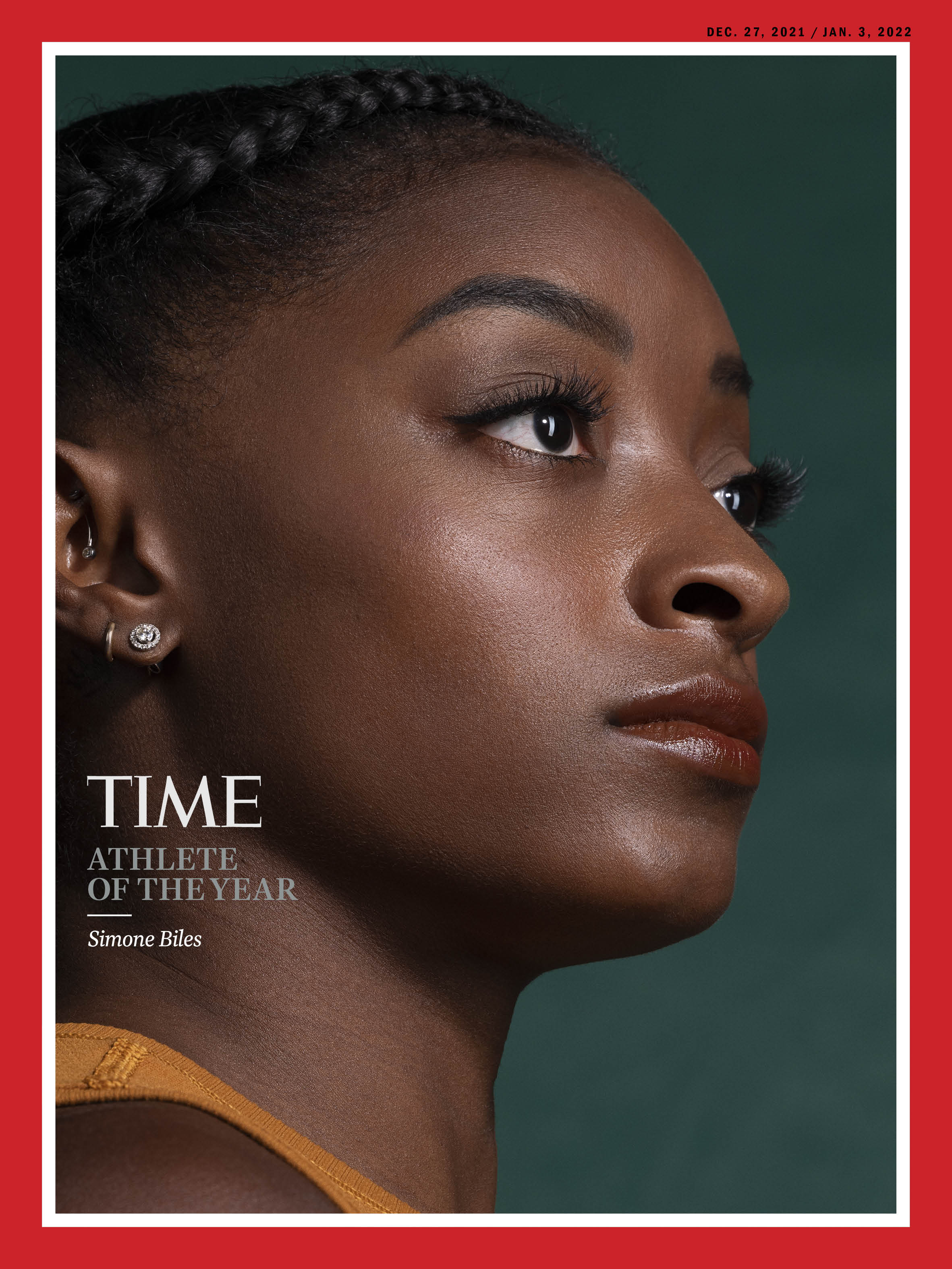

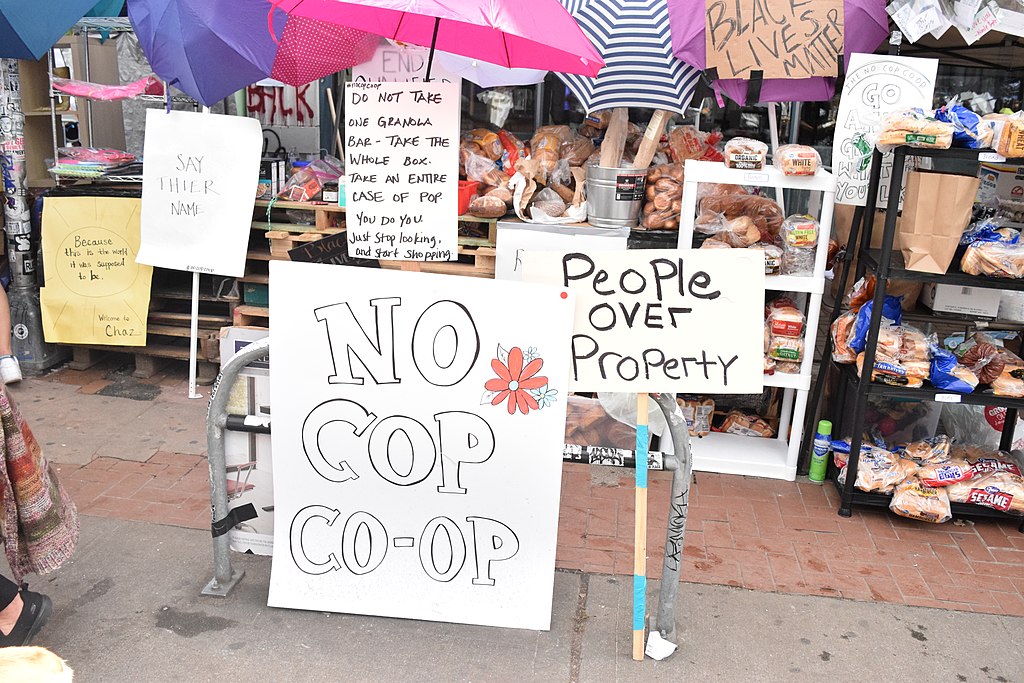
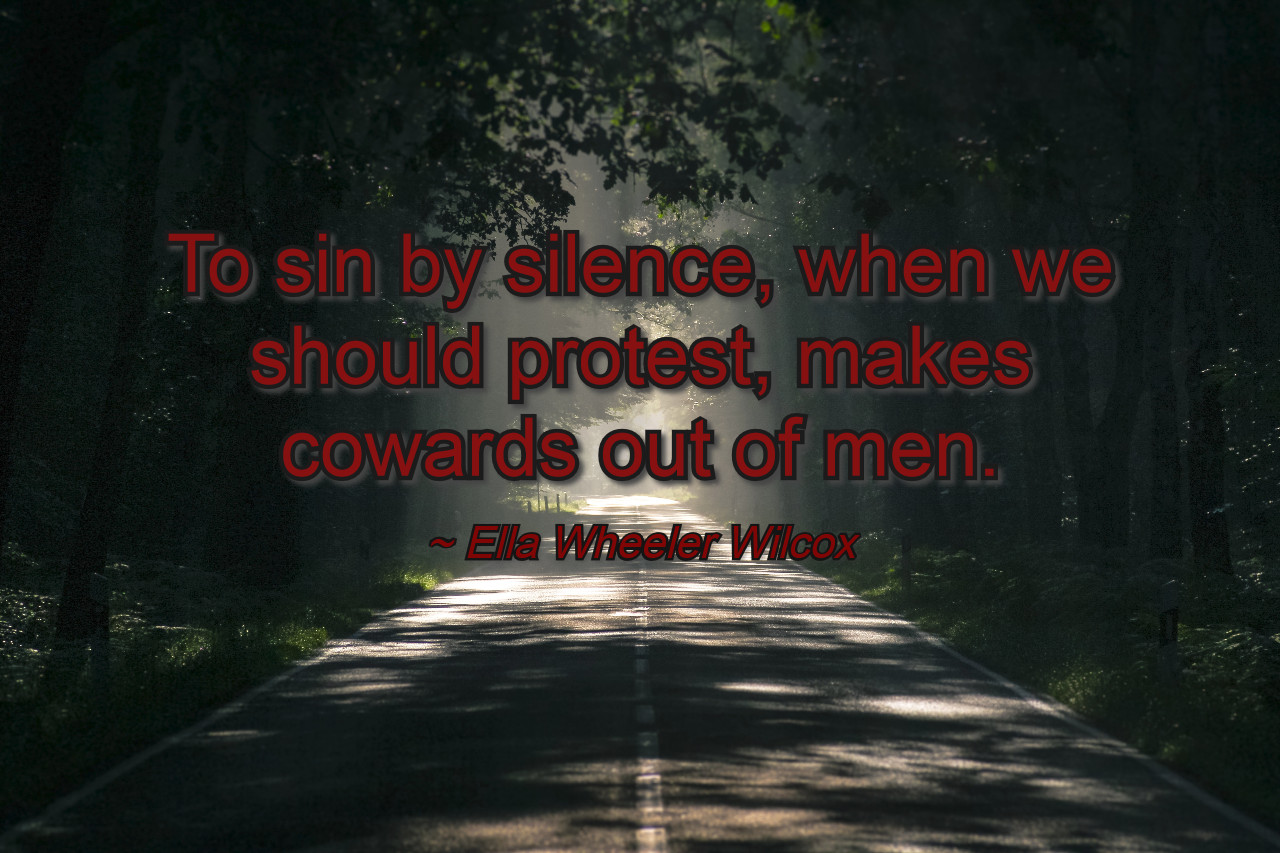 I know I am not the only one that has continued to read and think about the death of George Floyd and the protests that continue to spread around our nation. Just about everyone has had something to say and you cannot spend any time online at all without encountering something related to Floyd’s death and /or the protests. But in the past 24 hours I have been intentionally seeking and reading what African Americans have to say about it all. I have been doing that not because I think they have a monopoly on offense at the actions of Derek Chauvin, because I do not. Nor have I been doing it because I think that African Americans somehow have a more valuable or more relevant perspective or insight on the tragedy of Floyd’s death. I do, however, recognize that many African Americans have a different perspective and different insight into the situation than I do, and considering them has value.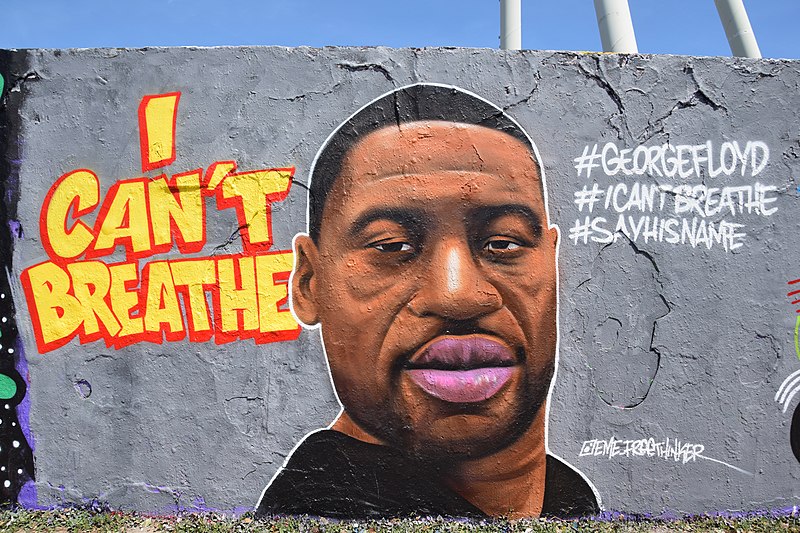
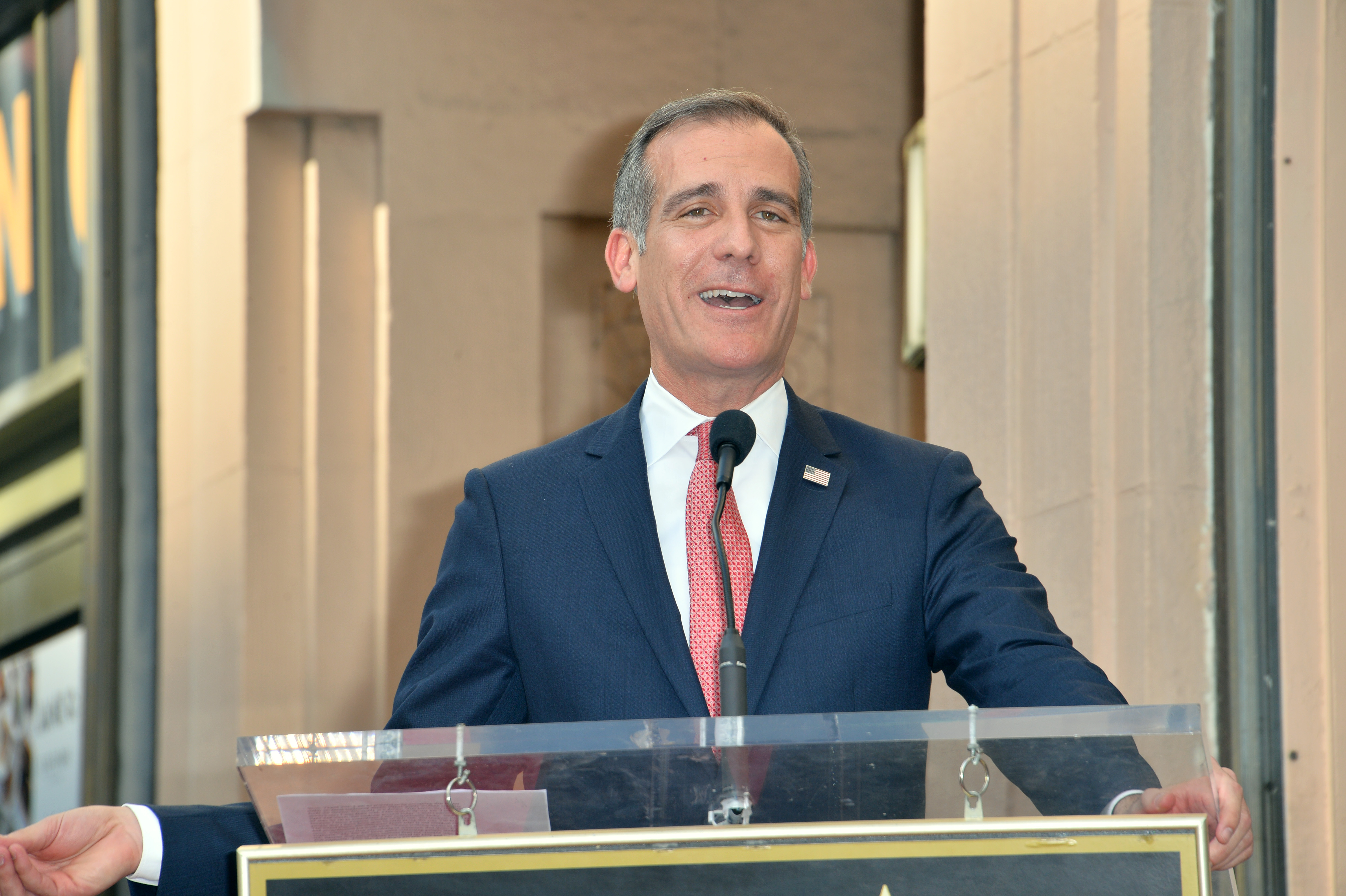
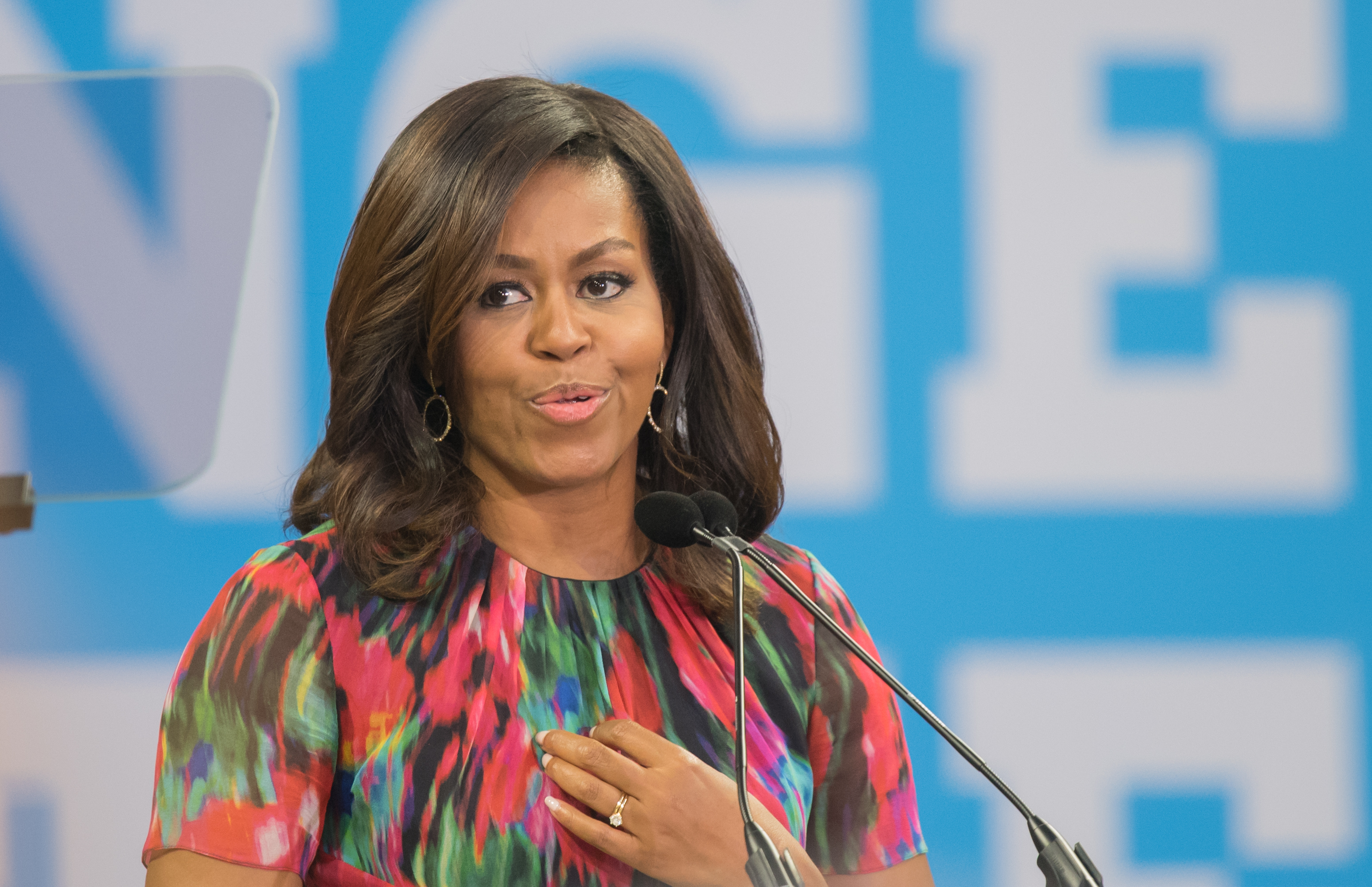
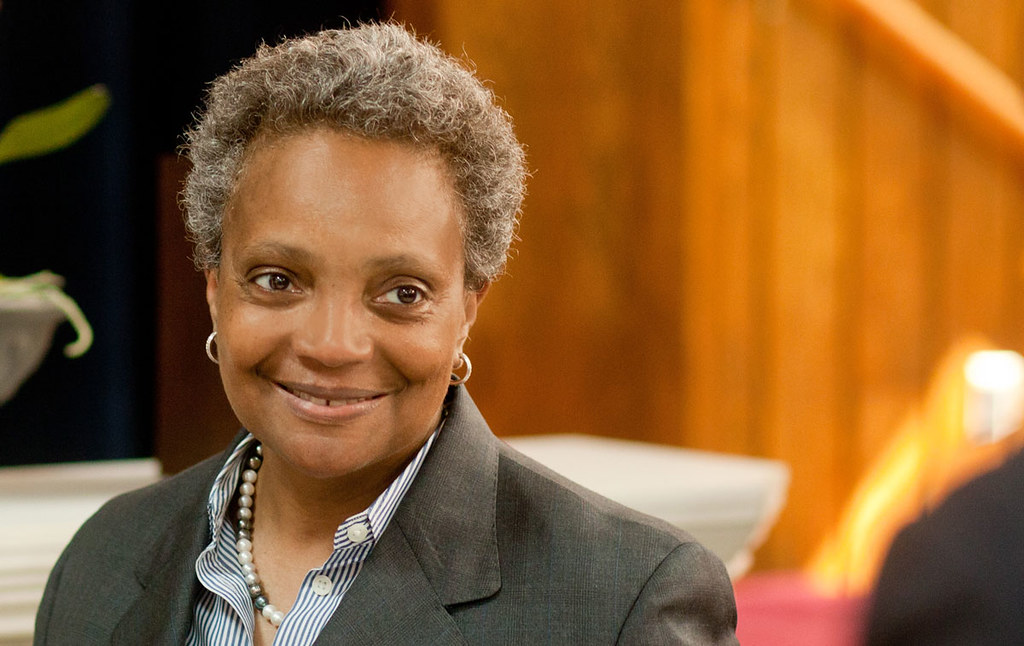
 THINKING OUT LOUD